The following are the EMI (English as a Medium of Instruction) General Education courses offered in the Spring Semester, 2026.

Please refer to the Course Inquiry System for detailed course information.

All students are welcome to enroll.


Domain Course Title Instructors Course Department


Humanities


Development of Civilizations

and Historical Thinking

Holroyd Ryan Edgecombe;

Chou, Catherine Lila

Department of History
History and Culture of Taiwan

Tzeng, Shih-Jung

Institute of Taiwanese Literature
Selected Reading of Modern Taiwanese Literature

Chen, Pei-Jeani

Graduate Institute of Taiwanese Literature
Contemporary Taiwan Cinema, Culture and Society Lin ,Ting-Ying Doctor’s Program in Teaching Chinese as a Second Language

Popular Romance and Detective Fiction

Chen, Yin-I Department of History

Social Sciences

Sustainable Development and Regional Revitalization Tsai, Wen-Yi International College of Innovation

AI and Society

Huang,  Kai Shen

International College of Innovation

Introduction to Mainland China

Kuo, I-Chang Institute of Development Studies
Natural Sciences

A Letter from the Starry Sky

Li, Chuan-Jui

Center for General Education

Informatics and Computing

Computational Thinking and Artificial Intelligence

Wu, Chih-Hsun Artificial Intelligence Applications

Interdisciplinary

(Humanities, Social Sciences)

Happiness

Nadeau Randall Laird

Center for General Education
American Sports History Eaton William Joshph Department of History
Key Issues in International Sustainable Development Ho, Hao-Tzu Graduate Institute of Development Studies


The following are the newly offered General Education courses offered in the Spring Semester, 2026.

Please refer to the Course Inquiry System for detailed course details.

All students are welcome to enroll.


Domain Course Title Instructor Course Department

Humanities

Russian Literature, Cinema and Art

Chen, Mei-Feng

Department of Slavic Languages and Literature

Xiqu Appreciation and Practice

Tsai, Hsin-Hsin

Department of Chinese Literature
Religious and Spiritual Tourism Wu, Hsin-Fang

Graduate Institute of 

Religious Studies

Pragmics:

Cross-Cultural and Digital Communication

Chang Chen-An Department of English

Social Sciences

Artificial Intelligence and the Law

 Lin, Chia-Ho,

 Liu Hung-En,

Liu Ting-Chi

College of Law

Sustainable Development and Regional Revitalization

Tsai, Wen-Yi International College of Innovation

Administration of Trademark

Right and Fair Competition

Shen, Chung-Lun College of Law

Human-centered Transportation

and Sustainable Campus Planning

Tsai, Yu-Hsin Department:Land Economics
Natural Sciences

A Letter from the Starry Sky 
(EMI Course)

Li, Chuan-Jui

Graduate Institute of Applied Physics

Informatics and Computing

Mathematical, Computational,

and AI Thinking in Everyday Life

Tsai, Yen-Lung

Mathematical Sciences

Inkscape Vector Design and Applications of Cloud-Based Open Resources

Eric Sun


Center for General Education

Interdisciplinary

(Humanities, Social Sciences)

Changing the World:NCCU General Education Lecture Series

Lin, Chi-Ping


Center for General Education

Interdisciplinary

(Social Sciences, Natural Sciences)

Health and Media: Communication,

Storytelling, and Practice

 Shih Tsung-Jen,

Chung Yi-Chieh

Department of Communication

Interdisciplinary

(Social Sciences, Informatics and Computing)


Digital Civilization: Technology, Ethics, and Humanistic Inquiry

Chuang Yi-Cjhi,

Young Kon Rad

Department of Economics

Global Trends in Nature Conservation: Forests, Ecosystems, and You

Huang Jingyan,

Shi Zhijing

Center for General Education

Interdisciplinary

(Social Sciences, Natural Sciences, Informatics and Computing)

The Spatial Perspective of the Humanities and Social Sciences: Interdisciplinary Applications of Geographic Information System

Liao, Hsin-Chung

Department of Public Administration


Reported by Yang Kai-chieh, Campus Correspondent

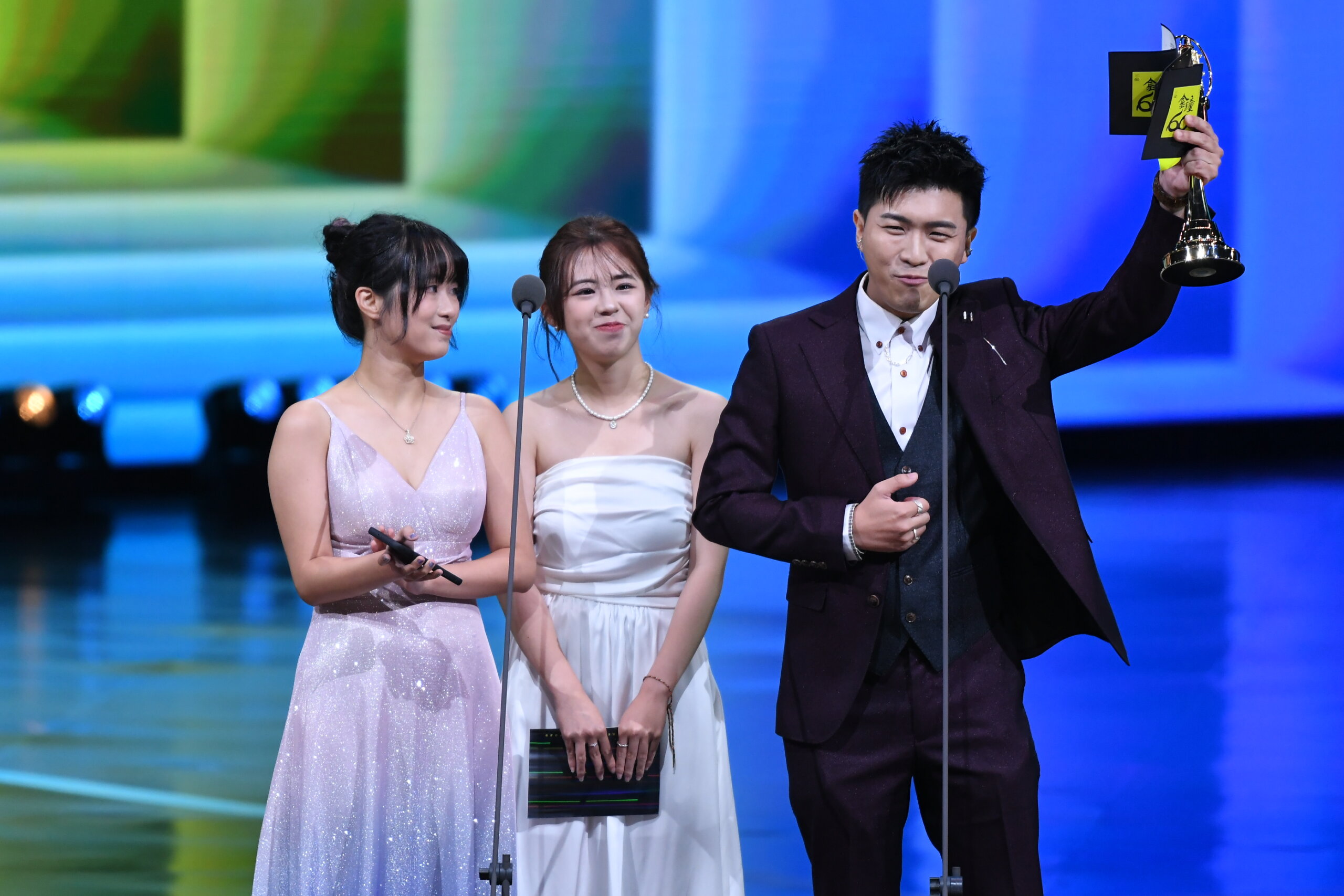
At the Golden Bell Awards ceremony for radio broadcasting, when the presenter announced the winner of “I’ve Liked You for a Long Time”, Sheng Bao-xin and Wang Yi-quan walked onto the stage in gowns with looks of astonishment. Standing beside them was their teacher Wu Yu-xuan (Snake) — an alumnus of the Communication Department at National Chengchi University and this year’s recipient of the Youth Program Host Award, as well as the mentor who introduced them to audio production.

This moment came only a year or two after the two students first met in Wu’s class on “Audio Self-Media Application and Creation” at NCCU. Through countless discussions and rounds of refinement, they ultimately completed the work that would be honored on the Golden Bell stage. 


Wu Yu-xuan won the Youth Program Host Award for “I’ve Liked You for a Long Time” at the Golden Bell Awards, sharing this honor with his two students. (Image credit: Wu Yu-xuan)


More Than Just General Education

The story began with a general education course titled “Audio Self-Media Application and Creation.”

For Sheng Bao-xin, a student majoring in Chinese Studies, this was an unexpected journey filled with passion. She had never planned to pursue audio work, but after hearing Neck’s lecture and being moved by his enthusiasm, she decided to take the course. Meanwhile, Wang Yi-quan, who already had experience with the university’s radio station Voice of NCCU, saw the class as an opportunity to refine her production and planning skills to better match professional industry standards. 

Rather than following a traditional theory-based approach, the course functioned like a pre-professional boot camp. From ideation and proposal, to recording, editing, and publication, students were required to produce a complete audio show from scratch. It was during the final project of this class that Bao-xin demonstrated her unique talent for planning, while Yi-quan excelled in precise editing — leading both to be invited to join Wu’s production team for “I’ve Liked You for a Long Time.” 

Endless Weekly Meetings

Yi-quan recalls thinking at first, “There’s no way we’d ever win a Golden Bell,” but once their teacher believed in them, they committed fully. The journey toward the Golden Bell was paved with countless nights of anxiety and hard work. The show was set in a fictional youth hostel, where interactions among guests, helpers (Yi-quan and Bao-xin), and the owner (Snake) used sound to teach listeners how to produce audio programs. 

Though the concept sounded romantic, its execution was intensely demanding. The team held meetings every Monday, recorded every Tuesday, and submitted work by Friday, with numerous revisions interspersed throughout. “The pressure was really intense,” Bao-xin confessed. As a producer, she often struggled to balance her own creative ideas with her teacher’s professional standards. In one episode discussion, Neck — blessed with a naturally great voice — argued that articulation was innate and couldn’t be taught, whereas Bao-xin insisted the show should include concrete practice methods for beginners. Conflicting perspectives frequently led to entire segments being rewritten, sometimes even moments before recording. 

Meanwhile, Yi-quan experienced her own kind of breakdown. A single episode’s rough cut could take four to five hours, with fine-tuning seemingly endless. She laughed while saying that she once received a revision call while riding her scooter. During that time, social life, family gatherings, and sleep were all sacrificed, and they even enlisted nearly a hundred people to record opening segments and sound effects. What sustained them was no longer just the small stipend, but a sense of responsibility — because “once your hair has been washed, you have to see it through” — and a stubborn desire to prove something. 


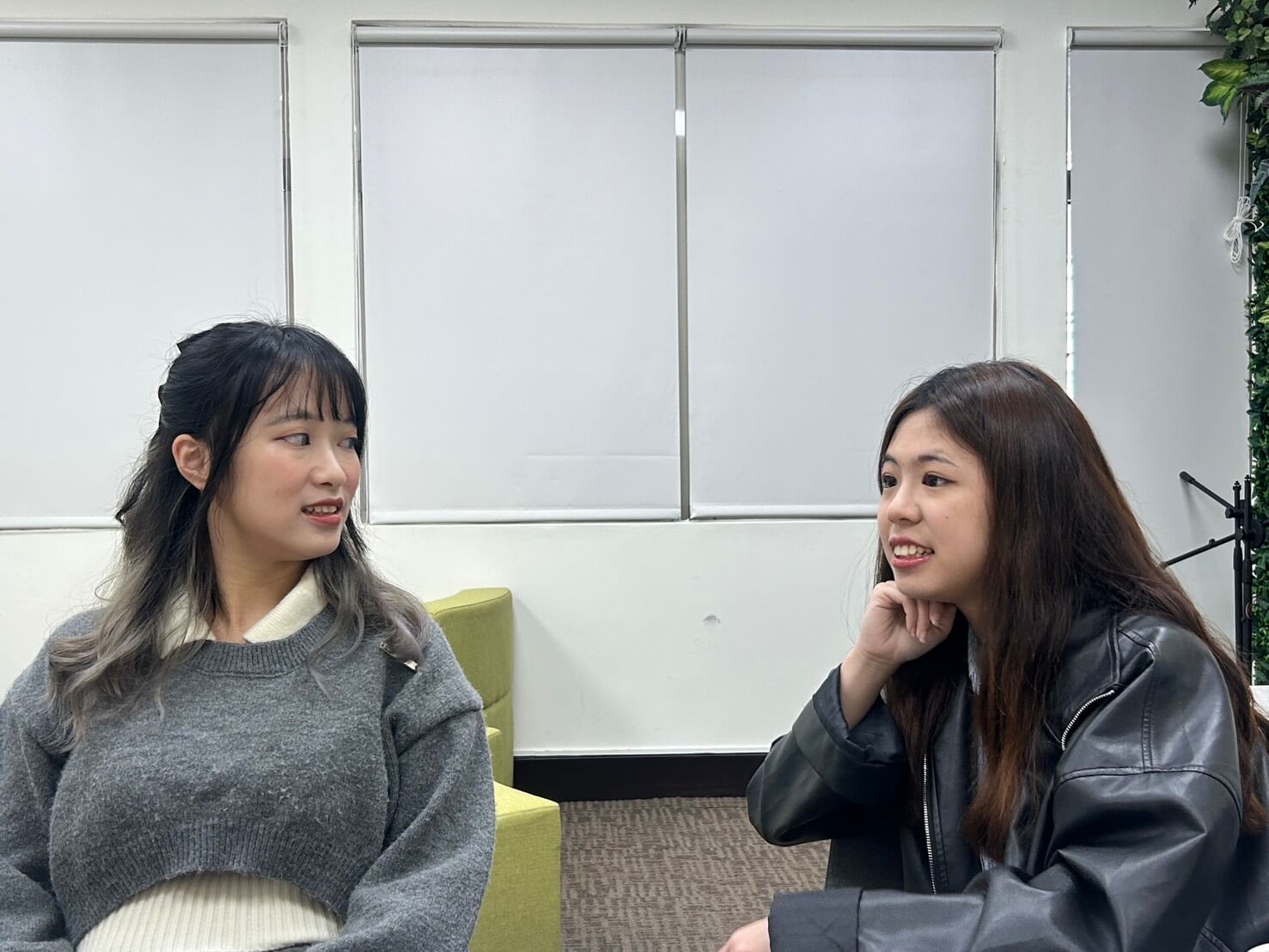
Sheng Bao-xin and Wang Yi-quan are interviewed, reflecting on their months-long journey of producing the program. Photo credit: Center for General Education


“Parents, Please Listen to Me”

Their long sonic expedition ultimately culminated in glory on the Golden Bell stage. While the award was officially for Wu as the Youth Program Host, the trophy held profound personal meaning for the two students and their families. 

For a long time, Bao-xin’s parents didn’t understand her dedication to audio production: “Why did you spend so much money on equipment?” “Why do you go home and stare at the computer?” Yi-quan’s parents even worried she’d only be able to make a living “selling medicine at a radio station.” “Before we won, they didn’t even know what I was doing,” she said with a wry smile. But on the day of the awards ceremony, she brought her entire family and friends, and when her name was called, all the doubts vanished. 

Yi-quan shared a touching moment: before going on stage, she asked her parents what she should say in her speech. Her father asked for only one thing: “Just say our names.” So others would believe it was truly their daughter. She did exactly that, thanking her parents loudly on stage. That brief speech was later clipped by her father — who isn’t adept with technology — and played repeatedly in their family chat group and at his workplace. 

That Golden Bell became a bridge for reconciliation with their families, proving that those sleepless nights and persistence were worthwhile.


The Endless Possibilities of Sound

Now that this chapter has closed, Yi-quan still yearns for the pure companionship that radio can offer, hoping to be the voice that comforts others late at night. Bao-xin sees this experience as invaluable nourishment; she has experimented in public relations, film festivals, and other fields, with audio production now a vital part of her diverse skill set.

Looking back on their journey from a general education class to the Golden Bell stage, their advice to younger students is practical: “Start early and make full use of school resources.” Even a general education course, if embraced wholeheartedly, can become a life-changing beginning — much like the youth hostel in “I’ve Liked You for a Long Time”, where guests arrive with different stories and leave with new strength. Sheng Bao-xin and Wang Yi-quan, once guests themselves, have now packed their bags and are ready for their next destination.


Wu Yu-xuan, Sheng Bao-xin, and Wang Yi-quan pose for a commemorative photo at the Golden Bell Awards ceremony. (Photo credit: Wu Yu-xuan)

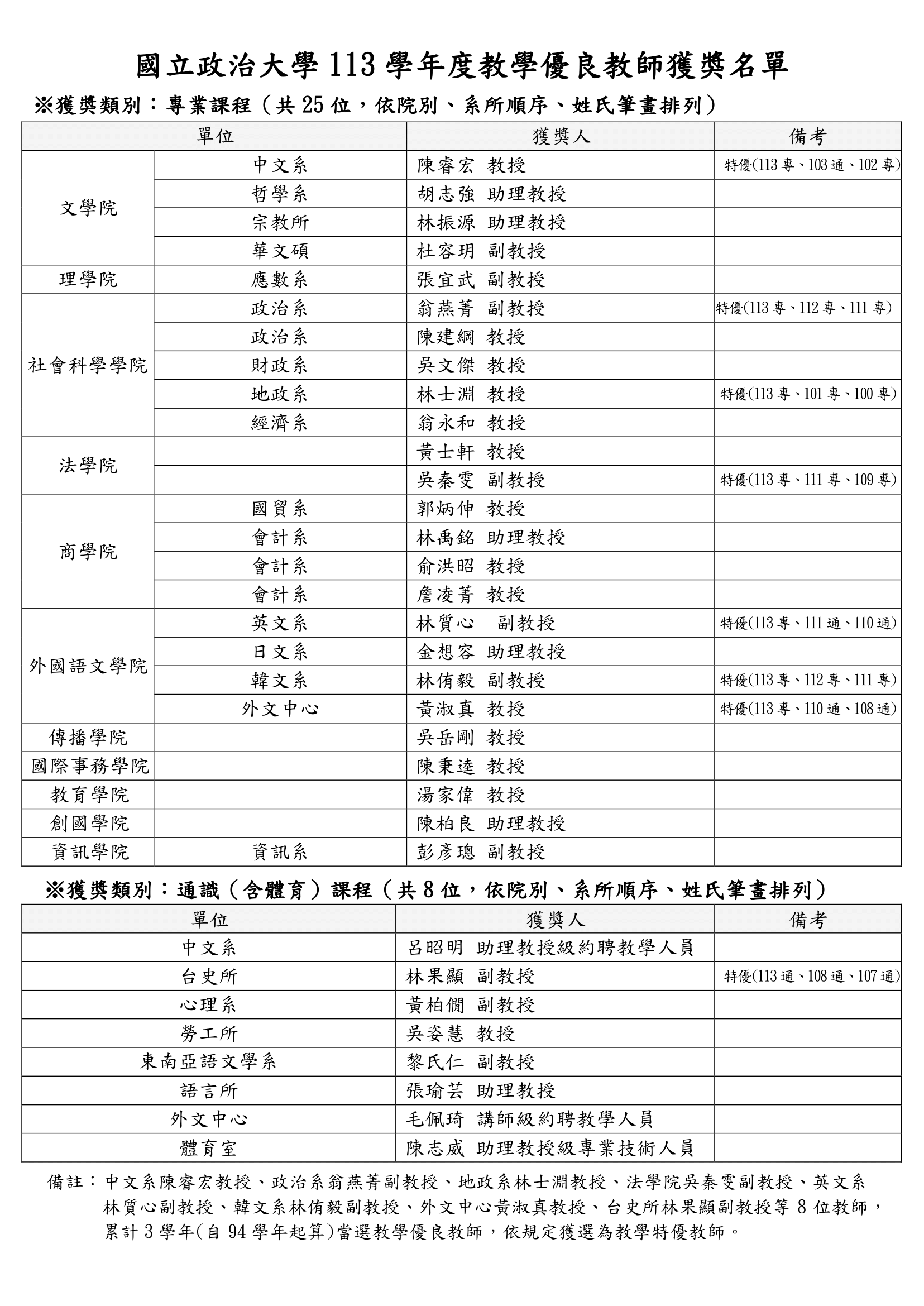
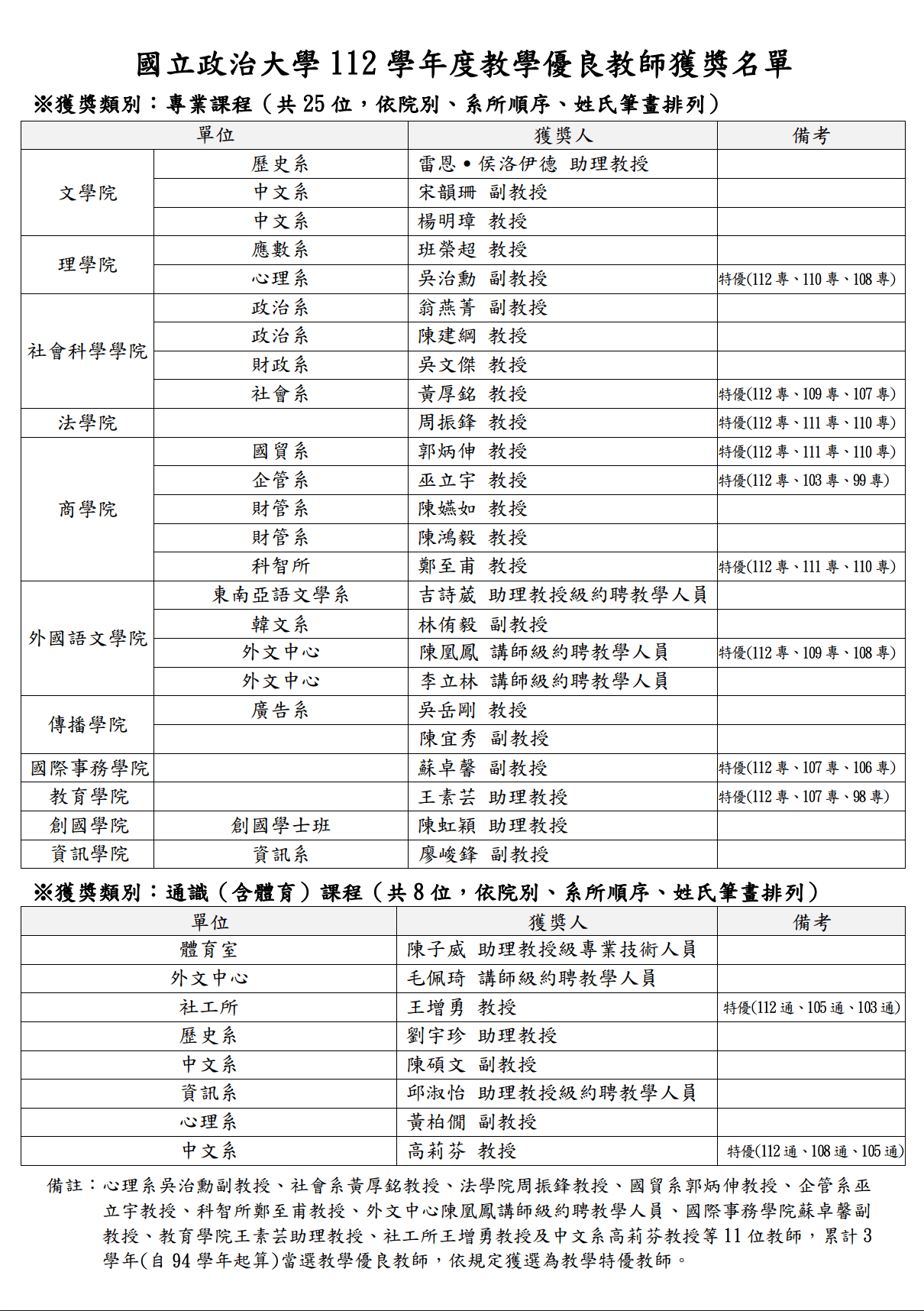
The award recipients for Outstanding General Education Instructors in Academic Year 113 are listed below. For more information, please visit the Personnel Office website.

Reported by Wu Yu-chieh, Campus News

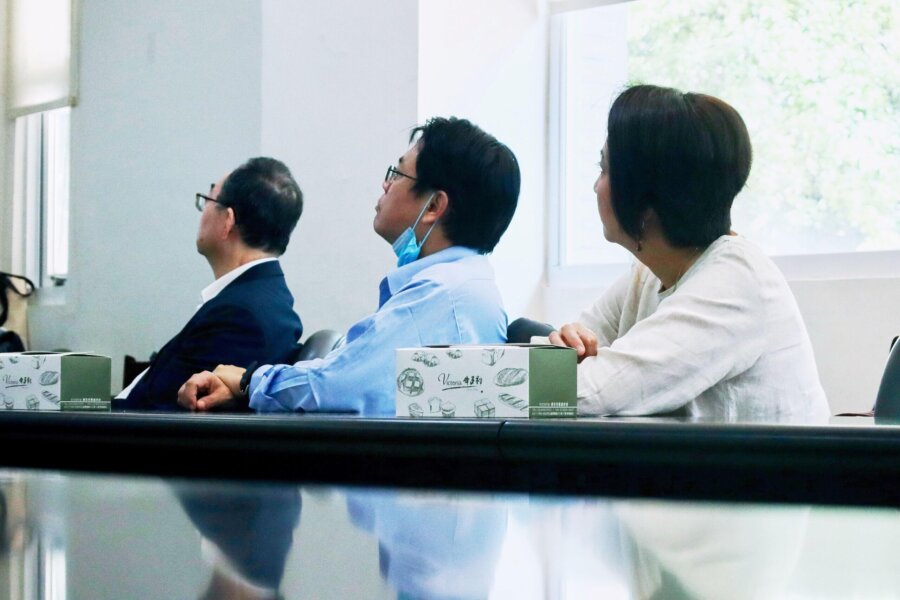
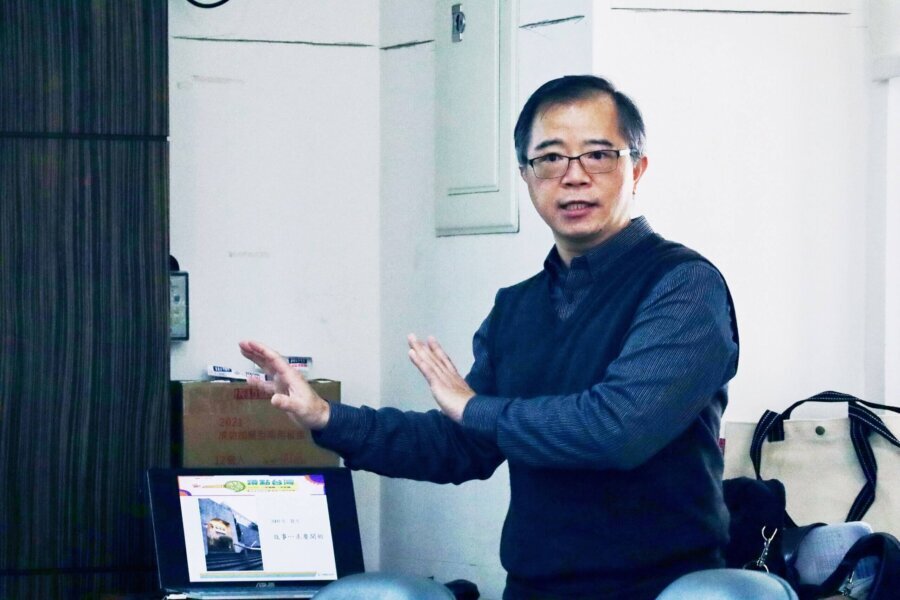
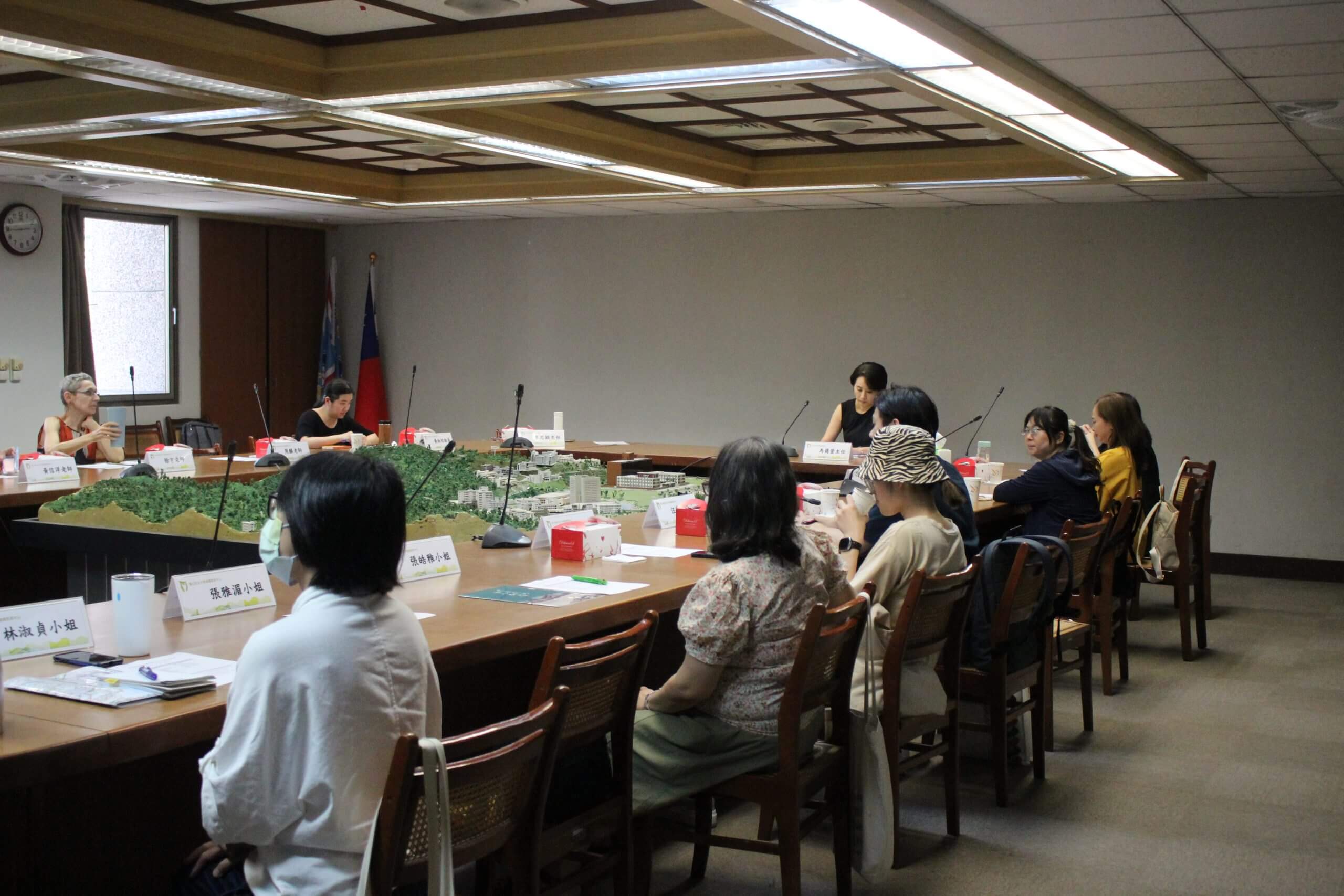
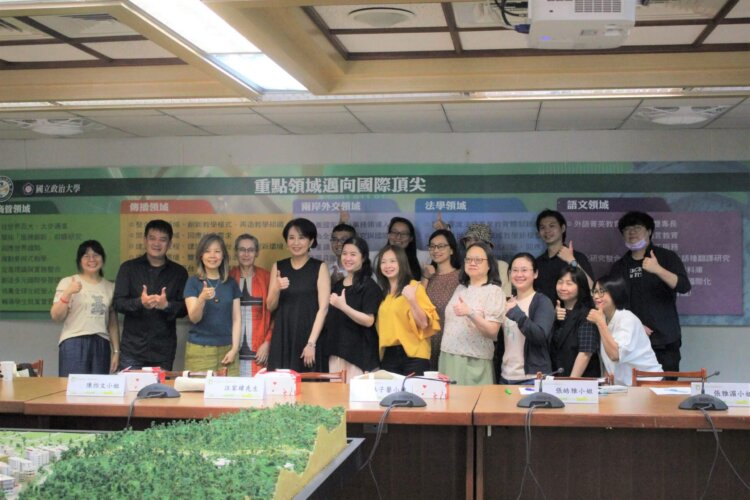
The Center for General Education of National Chengchi University (NCCU) held a panel discussion on the integration of the “Spotlight Taiwan” learning model into teaching on the 24th, inviting faculty members from various departments to explore potential avenues for future collaboration between NCCU and the Chunghwa Telecom Foundation. The goal is to incorporate the experiential practices of Spotlight Taiwan into academic activities.


The Center for General Education of NCCU held a panel discussion on integrating the “Spotlight Taiwan” learning model into teaching on the 24th. (Photo: Office of Secretariat)


Origins of the Collaboration

Since 2009, the Chunghwa Telecom Foundation and NCCU’s Department of Radio and Television have jointly launched the first “Spotlight Taiwan,” calling on university students to “serve with one hand and document with the other.” Participants are encouraged to spend 15 days during the summer in rural and Indigenous communities, providing local services while documenting stories across Taiwan through film and writing.

Growth of the Spotlight Program

Kao Shih-wei, Deputy CEO of the Chunghwa Telecom Foundation and an alumnus of NCCU’s Graduate Institute of Radio and Television, shared that the idea for Spotlight Taiwan emerged from his desire to give back to his juniors during a return visit to campus. Inspired by the concept of service learning, he integrated the Foundation’s 89 “Good Neighbor Digital Centers” across Taiwan to create opportunities for students to live and serve in unfamiliar communities.

Since then, the program has continued to expand—growing from a collaboration with a single department at NCCU to partnerships with universities nationwide. Now in its 16th year, Spotlight Taiwan attracts hundreds of students from across different disciplines every year.


Kao Shih-wei, Deputy CEO of the Chunghwa Telecom Foundation and an alumnus of NCCU’s Graduate Institute of Radio and Television, conceived the idea for “Spotlight Taiwan” during conversations with his former professors on a return visit to campus. (Photo: Office of Secretariat)


Service as the Core Focus

Unlike typical foundation service programs, Spotlight Taiwan emphasizes “service first, documentation second.” Documentation is merely one method of presentation, not the ultimate goal. Students plan and implement service activities based on the actual needs of local residents. Prior to departure, the Foundation provides training in essential skills such as field research, community interviews, and the production of local gazetteers. During the program, students apply their individual expertise to engage deeply with communities, giving voice to local issues while also discovering their own social impact and personal growth.

In an era of interdisciplinary knowledge, the complexity of contemporary problems can no longer be addressed with traditional thinking. “Every problem has corresponding solutions, grounded in the knowledge we have accumulated. Yet the traditional classification of knowledge can no longer bear the weight of today’s complex environment,” said Dean of Academic Affairs Lin Chi-ping. He further noted that NCCU’s efforts in University Social Responsibility (USR) and experimental education align closely with the philosophy of Spotlight Taiwan. By participating in the program, students experience problems firsthand, discover solutions, and integrate the natural, humanistic, and intellectual worlds within themselves—expanding their perspectives and reshaping their personal values.


Associate Professor Wang Ya-wei of the Department of Radio and Television, a long-time collaborator with “Spotlight Taiwan,” emphasized that the program prioritizes “service first, documentation second.” (Photo: Office of Secretariat)


Advantages and Challenges of Integrating the Program into Curriculum

Currently, several universities are in discussions with the Chunghwa Telecom Foundation about condensing the Spotlight Taiwan experience into academic courses. NCCU’s Department of Radio and Television, Chinese Culture University’s Department of Chinese Literature, and National Pingtung University’s Department of Special Education already offer related collaborative courses. These courses shift the execution of the program to the university level, with instructors guiding students through “mini-spotlight” projects. This allows students who cannot participate in the full program to learn how to apply their skills in community service. Associate Professor Wang Ya-wei of the Radio and Television Department noted that students’ limited perspectives often result in highly similar topics; therefore, in addition to technical skills, courses should also teach sociology, anthropology, and other subjects to guide students toward a broader perspective in the field.

Dean Li Wei-lun of the X Experimental College believes that the long-standing knowledge and practical experience of Spotlight Taiwan serve as a model for universities. As a hub for cross-disciplinary, self-directed learning and resource sharing, the College hopes to leverage the Foundation’s valuable experience to further collaborate and develop related courses—allowing students to clarify their identities through learning-by-doing while cultivating a spirit of goodwill. Lin Chi-ping added that NCCU’s active engagement in experimental education, sustainability, and interdisciplinary learning has positioned it at the forefront of innovative teaching in Taiwan. The university will fully support internal teaching units in developing collaborations with the Chunghwa Telecom Foundation.

Associate Professor Lan Mei-hua of the Department of Ethnology offered a different perspective, noting that the value of Spotlight Taiwan lies in the integrity of the full participation process. Compressing it into a two- or three-day course may hinder the original goals and effectiveness of the program. Furthermore, community service should be initiated and carried out by students themselves, with the university providing opportunities rather than all resources. “If the work is meaningful and feasible, resources will naturally follow,” Lan said. Deputy Dean of Academic Affairs and Director of the Center for Teaching and Learning Development Hsu Chih-chien added that, at this stage, it may be more practical for the university to first select suitable experimental courses and then align them with the Foundation’s training resources.


Vice President for Academic Affairs Lin Chi-ping stated that NCCU is actively committed to experimental education, sustainability, and interdisciplinary learning, and will fully support internal teaching units in developing collaborations with the Chunghwa Telecom Foundation. (Photo: Office of Secretariat)


Future Prospects

Ma Ai-hsuan, Deputy Dean of Academic Affairs and Director of the General Education Center, shared that the Center plans to implement an “N+X” credit course model next semester, serving as a bridge between formal coursework and fully self-directed learning. The “N” component provides students with the foundational knowledge required for fieldwork, followed by the “X” project, in which students independently execute their own initiatives. She believes that under this framework, collaboration with the Chunghwa Telecom Foundation allows students who have not yet participated in Spotlight Taiwan to gain field experience without compromising the integrity of the overall curriculum. Additionally, it increases students’ chances of standing out in the Spotlight Taiwan selection process.


Wang Ya-ping, Assistant Executive Director and Director of the University Social Responsibility (USR) Office, noted that NCCU is strong in the humanities and social sciences, and considers “visual literacy” an essential secondary skill for students. While students’ visual storytelling abilities have improved over the years, their problem-awareness still needs to be strengthened. NCCU also has over 200 Indigenous students, including approximately 60 Indigenous graduate students. Previous research often addressed community issues solely through written theses; combining these efforts with visual media would enhance their impact. Furthermore, since NCCU’s USR initiatives are deeply engaged across multiple ethnic communities, the Office can assist in connecting the Foundation with potential sites or facilitating the implementation of new thematic projects in the future.

[ Center for General Education News]

On November 10, the Center for General Education of National Chengchi University held a general education lecture titled “A Winding Journey: Reflections and Practices in Cross-Interdisciplinary General Education.” The event invited Professor Hsieh Ming-Feng, recipient of the 11th National Outstanding General Education Teacher Award, to share how his interdisciplinary teaching philosophy and practical trajectory have helped bridge the classroom with the real world, while embedding the spirit of general education into professional training.
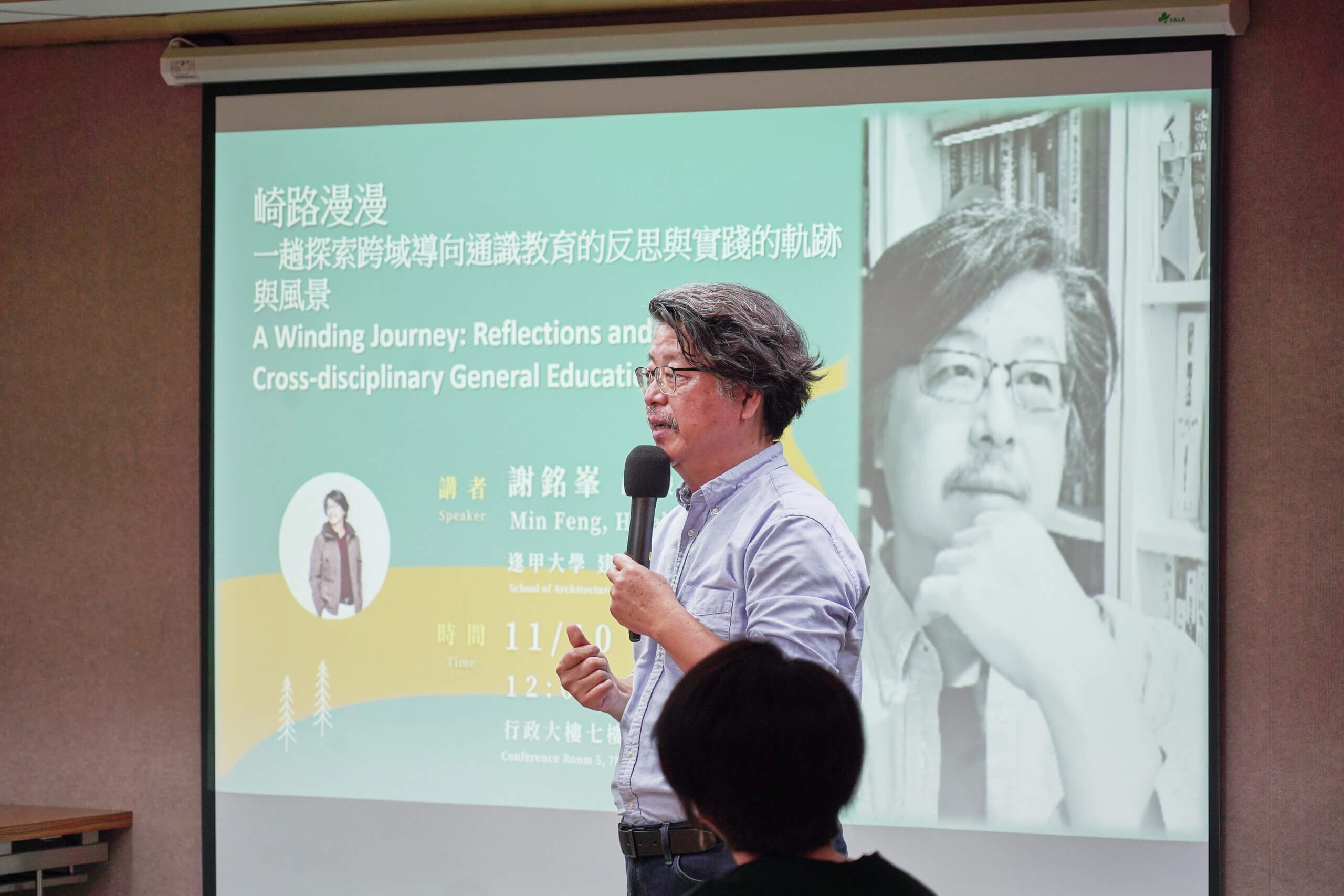
Associate Professor Hsieh Ming-Feng, College of Architecture and Design, Feng Chia University. (Photo courtesy of the Center for General Education )


General Education as the Socialization of Professional Education

Associate Professor Hsieh Ming-Feng of the College of Architecture and Design at Feng Chia University began by reflecting on his diverse background spanning music and architecture. He pointed out that contemporary higher education faces challenges such as rigid disciplinary divisions and the gap between academic learning and practical application. He warned that if universities overly cater to immediate labor market demands, they risk being reduced to mere training grounds for narrowly defined specialists.

While universities are responsible for cultivating students’ professional knowledge and skills, they must also confront the problem of excessive fragmentation of knowledge. In this context, general education—aimed at nurturing well-rounded, broadly educated individuals—becomes an ideal starting point for integrating disciplinary knowledge and breaking through established frameworks.

In response, Professor Hsieh developed a teaching model he calls “general-education-oriented socialized professional education,” creating a learning environment centered on solving real-world problems. He emphasized that general education should play a pivotal role: like a hammer that breaks down barriers between disciplines; like a window that allows glimpses beyond disciplinary walls; like a ladder that elevates one’s perspective; and like a rope that connects otherwise unrelated bodies of knowledge.

Further drawing on the ideas of American educational philosopher John Dewey, Professor Hsieh explained that what schools should do for learners is not merely to transmit knowledge, but rather “to present them with real-world problems, guide them in finding solutions, and provide opportunities for practice and verification.”


Interdisciplinary Thinking in Course Design

In terms of curriculum design, Professor Hsieh has created and taught numerous integrative interdisciplinary courses to realize cross-domain collaboration. One such course, Music and Architecture, once attracted students from as many as 19 different departments, posing significant challenges for classroom participation and engagement. Through music and architecture as entry points, the course guides students to explore how two seemingly disparate art forms can foster interdisciplinary creativity.

Professor Hsieh noted that many architects draw inspiration from music, and he encouraged students to analyze such works to understand the relationships between space and time, sound and vision. Through this process, students come to recognize that disciplinary boundaries are not fixed, but fluid and interconnected.

Another university-wide required freshman general education course, Dialogue between Science and the Humanities, addresses the historical divide between scientific and humanistic disciplines dating back to ancient Greece. Structured around four stages—“Initiation, Divide, Crossing, and Integration”—the course guides students to rethink how these two domains might once again work hand in hand.

Additionally, the environmental sustainability course Smart Green Taiwan, which has been offered at Feng Chia University for 15 semesters, emphasizes food-related issues, problem-based learning, project-based learning, and hands-on practice. Students work in interdisciplinary teams to select their own research topics and present their outcomes in three-minute short videos uploaded to YouTube, enabling “boundary-less sharing.” In this way, the broader public can also engage with the sustainability issues addressed in the course.


Learning by Doing: Turning Ideas into Reality

In practice, Professor Hsieh integrates external projects into his courses, leading students into real-world contexts to realize the principle of “learning by doing,” while further embedding general education values into professional courses.

For example, the Participatory Design course series aims to address three major shortcomings of traditional architectural training: students’ limited understanding of project sites, insufficient technical experience, and few opportunities to interact with actual users. To tackle these issues, Professor Hsieh led students into a traditional Chinese medicine community in Taichung, where they transformed a vacant lot into a community vegetable garden. Students brought physical models to discuss ideas with local residents, personally turning concepts into reality and learning how to negotiate between ideals and real-world constraints.

In another example, through collaboration on an Atayal indigenous house reconstruction project, graduate students were divided into a “documentary group” and a “house curriculum teaching group.” Students were not only learners, but also curriculum designers and active participants, responsible for teaching local elementary school students about traditional indigenous house culture. Through firsthand involvement, students realized that the course offered cultural knowledge unattainable within a conventional classroom, and they began to reflect on the disappearance of their own ethnic cultures.

Both cases embody Professor Hsieh’s “reverse learning” approach of “learning while doing, doing before teaching,” forging a concrete link between theory and the real world.
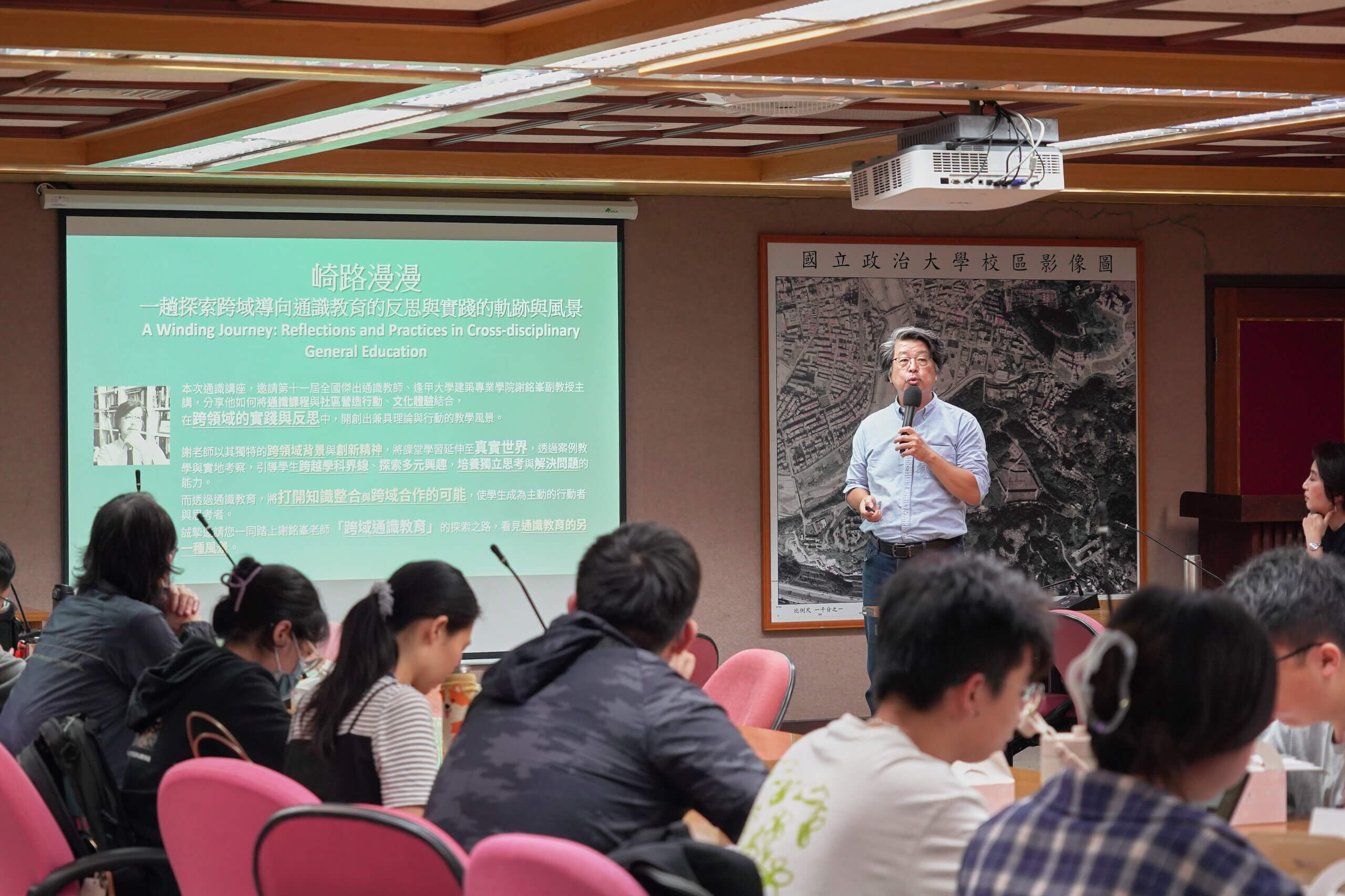
Professor Hsieh shared many inspiring course examples with NCCU faculty and students. (Photo courtesy of the Center for General Education)


At the lecture, Professor Hsieh Ming-Feng presented numerous compelling course examples that showcased his distinctive approach to curriculum design and his teaching strategies that integrate interdisciplinary learning with both general and professional education. He emphasized that the integration of knowledge and its practical application constitutes the core value of university general education. This spirit, he argued, should be brought into professional classrooms, allowing humanistic values to resonate with technical systems and opening up new possibilities. This philosophy and practice aptly illustrate why he was honored with the Outstanding General Education Teacher Award.

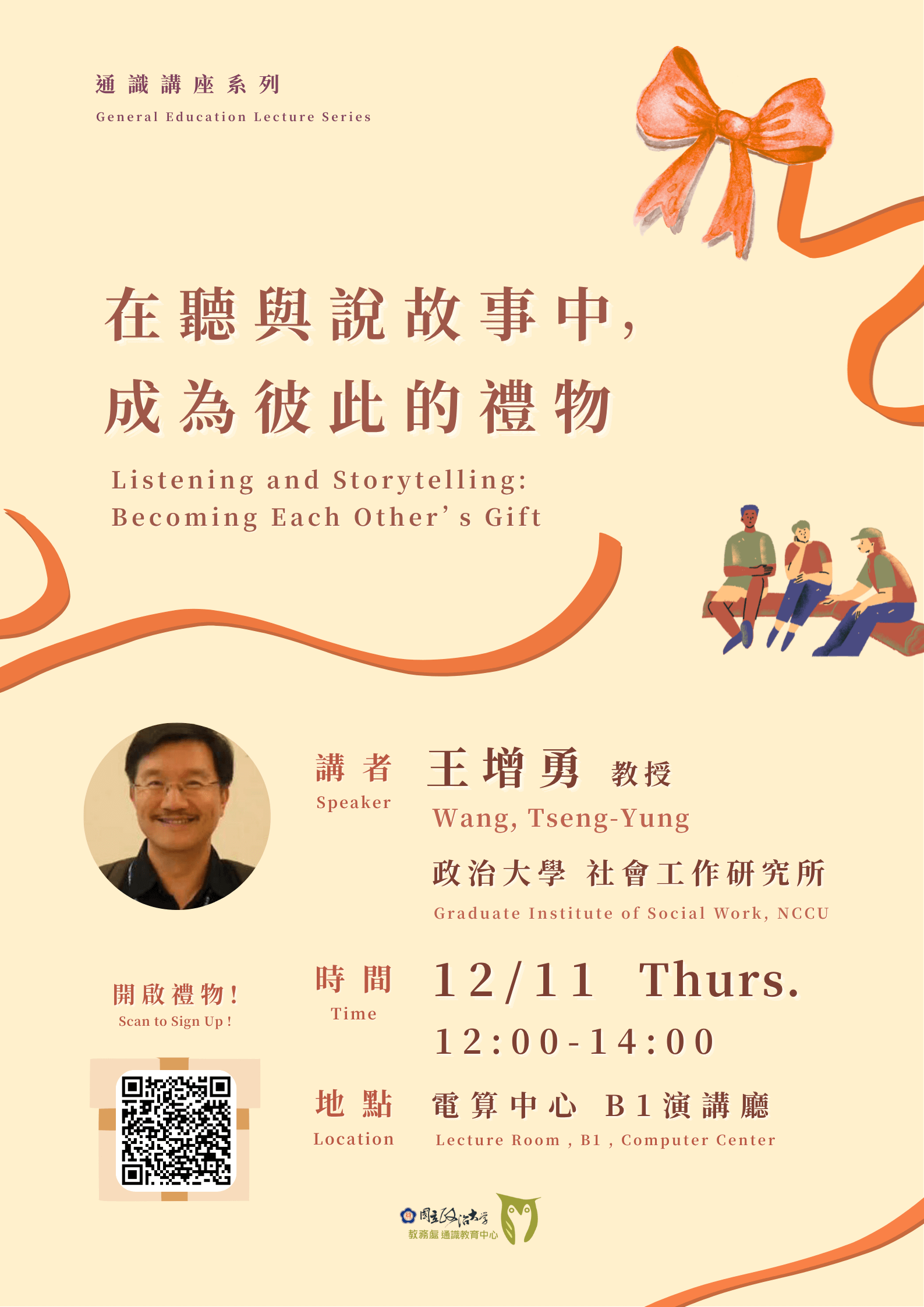
This general education lecture invites Professor Tseng-Yung Wang from the Graduate Institute of Social Work to share his insights.

Professor Wang’s general education course, Aesthetics of Existence of LGBT+, weaves connections between people through storytelling.

In this course, participants listen to others’ life stories and reflect on their own experiences.

Through shared meals and narratives, they witness both vulnerability and strength in one another.

This lecture will explore how listening and storytelling can open up spaces for understanding and empathy—allowing us to become gifts in each other’s lives.

📍 Course Outline: Aesthetics of Existence of LGBT+

All students, faculty, and staff are warmly welcome to join.

Lunch boxes will be provided as a small token of appreciation. 🎁

📍 Date & Time: Thursday, December 11, 2025, 12:00–14:00

📍 Location: Lecture Room , B1 , Computer Center (Meals will be provided after the lecture.)

📝 Register Now: https://reurl.cc/mkG9G1

☎️ Contact: Ms. Wu, Center for General Education, Ext. 63872

✉️ Email: yun63872@nccu.edu.tw

[Department of Radio and Television]

The 60th Golden Bell Awards for Radio were recently held, and Wu Yu-Hsuan , Adjunct Assistant Professor at the College of Communication, National Chengchi University, won the “Best Youth Program Host Award” for his program Already Liked You on Broadcasting Corporation of China (BCC) Han Sheng Radio. The program is not only his personal creative work. Professor Wu emphasized that this honor belongs to the entire team: “Please give the applause to my students — they made this possible!”


Adjunct Assistant Professor Wu Yu-Hsuan of the College of Communication received the “Best Youth Program Host Award” for the program Already Liked You. The production team includes NCCU students Sheng Bao-Xin and Wang Yi-Chuan, both of whom are students from Professor Wu’s course “Voice-based Self-Media Application and Production.”


A_sheng chen

Beginning with a General Education Course: Faculty and Students Co-create a Radio Program

The program is hosted and planned by Professor Wu Yu-Hsuan, with team members Sheng Bao-Xin, a student double-majoring in Chinese and Radio and Television, and Wang Yi-Chuan, a student in the Department of Radio and Television. Both students were enrolled in his general education course “Application and Creation of Voice-Oriented Self-Media” offered through NCCU’s College for Self-directed Learning. Already Liked You is part of the youth program series Radio Hostel on Han Sheng Radio. Centered on the idea of “teaching radio through radio, and exploring audio media through audio media,” the program combines hands-on learning with narrative settings, inviting young listeners to rediscover the world through sound.

The program is designed like a youth hostel themed around sound. Participants learn planning, hosting, and editing, and through simulation and discussion, explore their own modes of expression. The program does not seek to dazzle or overwhelm; instead, it uses sound as a guide, accompanying listeners as they discover their own pace between creation and daily life.

The collaboration began through the course “Application and Creation of Voice-Oriented Self-Media”, and the two students ultimately shared the honor of the Golden Bell Award with Professor Wu.

A Program that Accompanies Youth Through Sound Wins the Golden Bell Award

Reflecting on how the program began, Professor Wu recounts with emotion: “This program was recorded at Voice of NCCU, right after I finished teaching. In that moment, I felt as if I was meeting my younger self—the one who first entered the world of radio over ten years ago.” He expressed gratitude to Han Sheng Radio and his team for their support: “Thank you to everyone I love and who loves me. Thank you, radio, for reminding me who I am.”


Adapted from: Department of Radio and Television, National Chengchi University

https://rtv.nccu.edu.tw/PageDoc/Detail?fid=4095&id=36548

This general education lecture invites Associate Professor Hsieh, Ming-Feng from the College of Architecture, Feng Chia University, recipient of the 11th National Outstanding General Education Teacher Award, to share how he integrates general education courses with community-building initiatives and cultural experiences. Through interdisciplinary practice and reflection, he has developed a teaching approach that bridges theory and action.

With his distinctive interdisciplinary background and innovative spirit, Professor Hsieh extends classroom learning into real-world contexts. Through case studies and fieldwork, he guides students to cross disciplinary boundaries, explore diverse interests, and develop independent thinking and problem-solving skills.

Through general education, the possibilities of knowledge integration and cross-domain collaboration are opened, enabling students to become active participants and thinkers. We sincerely invite you to join Professor Hsieh, Ming-Feng in exploring “Interdisciplinary General Education” and discover a different perspective on general education.

📍 Time: November 10, 2025 (Mon) 12:00–14:00

📍 Venue: Administration Building, 7th Floor, Conference Room 5 (Lunch provided)

🔗 About Professor Hsieh: https://reurl.cc/VWrpXn

📝 Register Now: https://reurl.cc/A3Qn4j

☎️ Contact: Ms. Wu, General Education Center, Ext. 63872

✉️ Email: yun63872@nccu.edu.tw

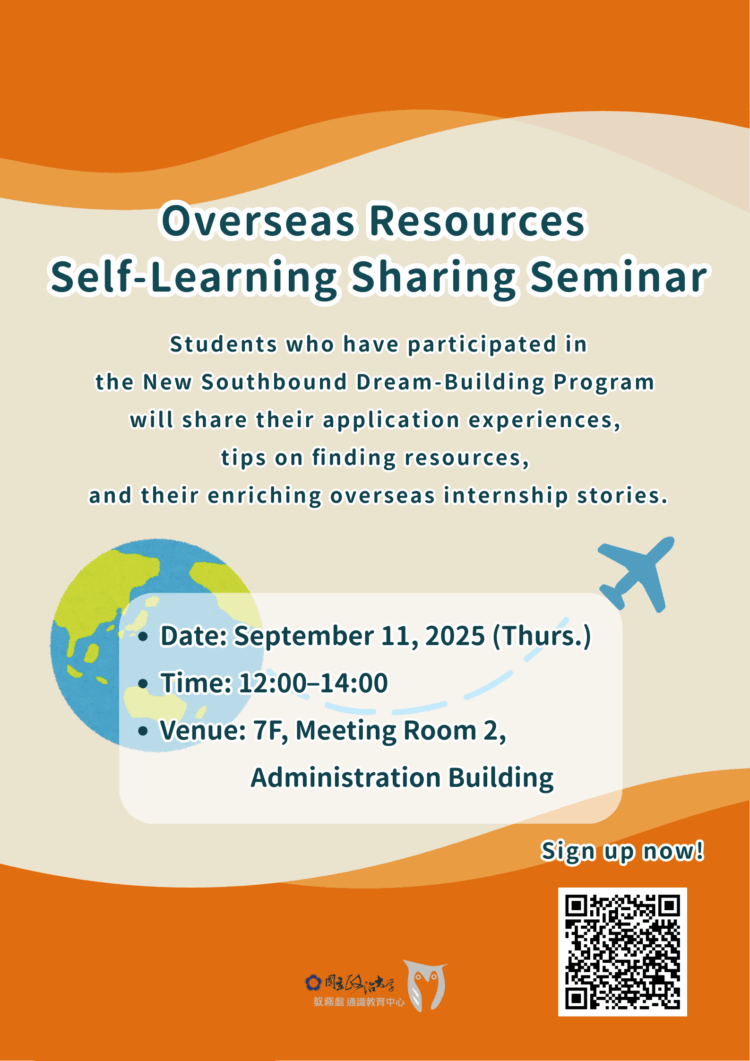
How can you take the initiative to find resources, apply for programs, and go abroad for internships?

In this seminar, students who have participated in the Ministry of Education’s New Southbound Dream-Building Program will share their application experiences, tips on finding resources, and their enriching overseas internship stories.

Students interested in applying for international internship programs are encouraged to seize this opportunity to join!

Note: Internship program applications can also be counted toward credits for NCCU’s “Certified-based Self-Learning” program.


Event Information

  • Date: September 11, 2025 (Thursday)

  • Time: 12:00–14:00

  • Venue: 7F, Meeting Room 2, Administration Building

  • Registration link: https://reurl.cc/9n0bQO (Lunch boxes will be provided)

  • Contact person: Ms. Wu

The following College General Courses will be offered in Semester 114-1:

Domain Course Title Instructors Offering Department
College General Courses Seminar in Self-directed Learning: Application of Free Software GIMP Yan-Long Tsai Center for General Education
College General Courses Seminar in Self-Directed Learning: Exploring the Culture and History of the Greater Wenshan Area Pei-Hsin Chan Center for General Education
College General Courses Seminar in Self-Directed Learning: The Theory of Humanistic Teaology – Tea Making Science Zhen-Hong Gao Center for General Education

College General Courses

Seminar in Self-Directed Learning: 3D Modeling and Prototyping- From Concept to Creatione Ga-Se Fan Center for General Education


For detailed course information, please click on the course title to access the Course Query System. We warmly welcome students to enroll!

Stay updated with the latest news and activities from the General Education Center:

Contact (College Courses):

Ms. Chang

Tel: +886-2-2939-3091 #63871

Email: chy@nccu.edu.tw


[Center for General Education News]


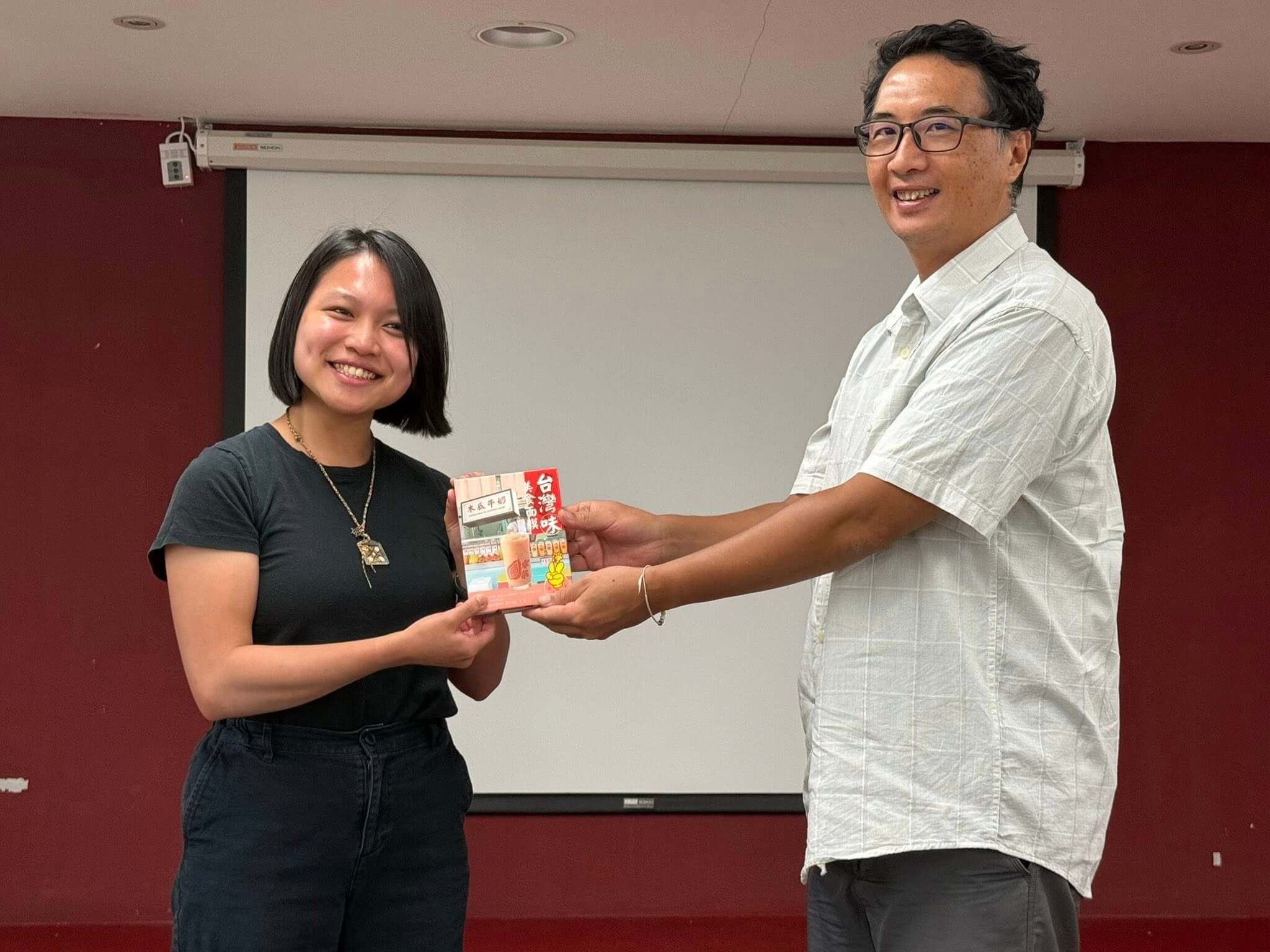
The Center for General Education at National Chengchi University (NCCU), in collaboration with the Colleges of the Chinese University of Hong Kong (CUHK), successfully launched the intensive summer general education course Flying Heroes. The program, part of the Taiwan–Hong Kong Joint College initiative, brought together students from both institutions to engage in cross-cultural learning and in-depth exploration of Taiwan’s immigrant communities.


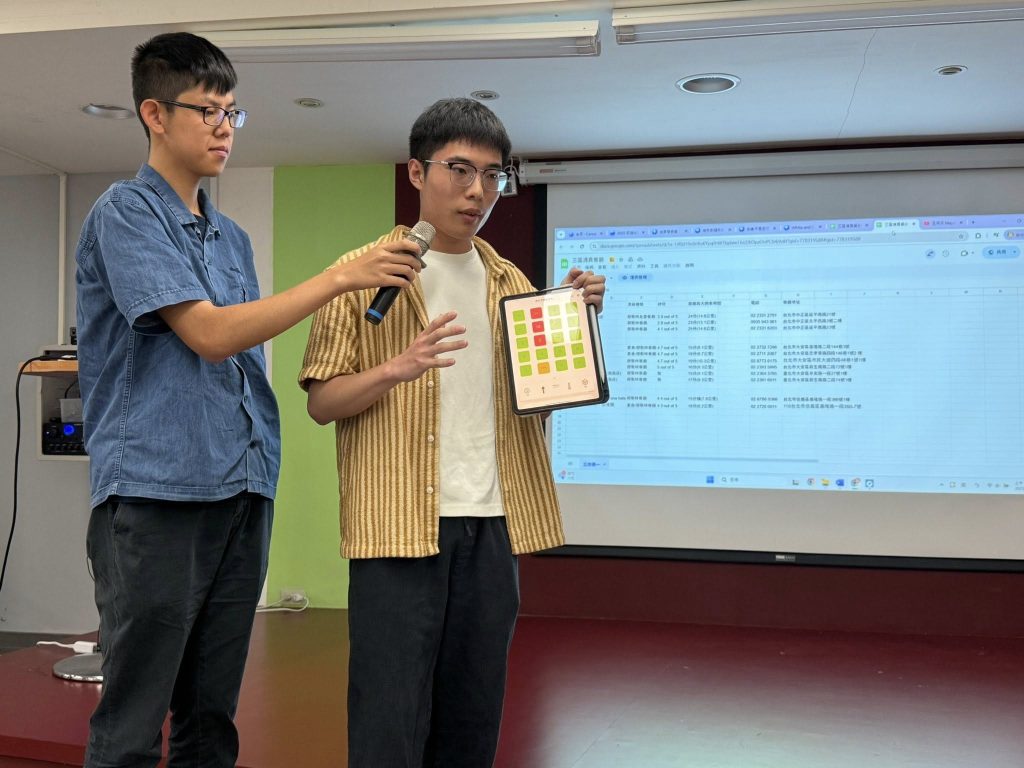
 Student presentation. (Photo courtesy of Prof. Ya-Ping Wang)

Taiwan–Hong Kong Student Teamwork to Understand Taiwan’s New Immigrants

Over the course of two weeks, mixed student teams conducted fieldwork in Southeast Asian enclaves across Taipei. The course design was inspired by the “Little Flying Heroes Workshop” organized by Brilliant Time: Southeast Asian Bookstore. Through site visits, expert lectures, and hands-on workshops, participants expanded their perspectives, gained insights into the lives of new immigrants, and documented Taiwan’s evolving multicultural society.

This year, the program further incorporated the NCCU USR Grocery Project, guiding students to the Zhongzhen Community in Longgang, Taoyuan, as well as the Taoyuan Youth Bureau Startup Hub. Professor Ya-Ping Wang of NCCU’s Department of Ethnology noted that these activities not only enabled Hong Kong students to step beyond Taipei and New Taipei but also challenged their stamina. She humorously described the program’s pace as being “like drinking espresso.”


Students at the presentation event. (Photo courtesy of Prof. Ya-Ping Wang)

Despite the intensive schedule, the final student presentations impressed both faculty and peers. Their reports highlighted exceptional creativity, teamwork, and problem-solving capacity. Professor Wang reflected: “Listening to the students’ reports, I was deeply moved by their creativity and endless potential for action.”

This course underscores NCCU’s commitment to fostering global perspectives, intercultural exchange, and the development of civic-minded, action-oriented learners.

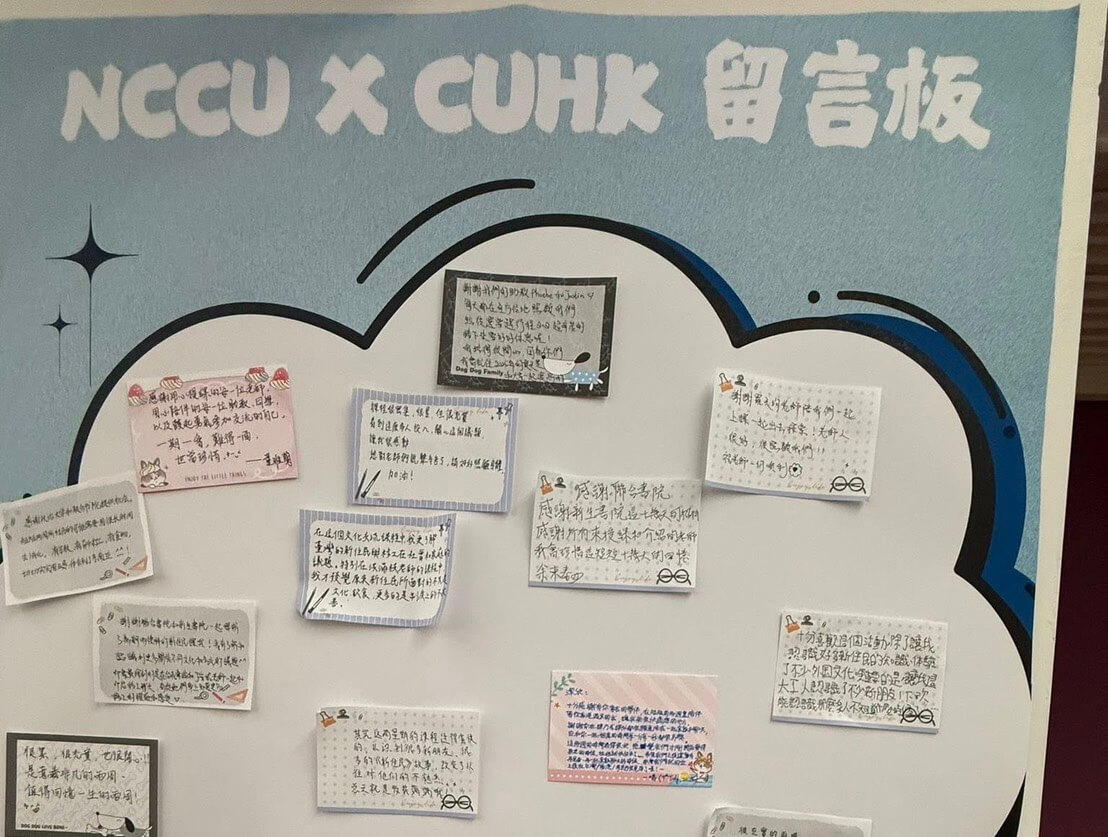
Message board from students of both universities. (Photo courtesy of Prof. Ya-Ping Wang)
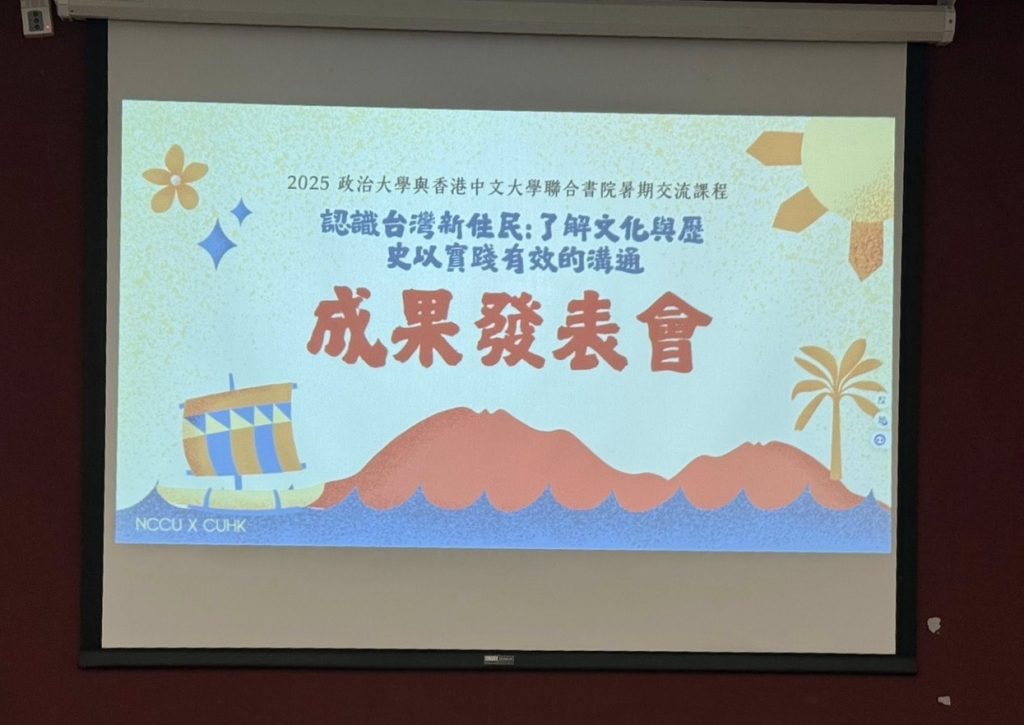
Student presentation slides (Photo courtesy of Prof. Ya-Ping Wang)

The newly offered general education courses for the first semester of the 2025–2026 academic year are as follows:


Domain Course Title Instructor Offering Unit
Natural Sciences Sleep and Health Chen, Chieh-Wen WenInstitute of Neuroscience / College of Science

Humanities

 Introduction to Taiwanese Tsai, Hui-Ming Graduate Institute of Taiwanese Literature / College of Liberal Arts
Social Sciences AI, Gender, and Labor  Chen, Fu-Hsuan Graduate Institute of Labor Research / College of Social Sciences

Interdisciplinary (Humanities, Social Sciences)

Innovative Media and Creativity Lin, Tsui-Chuan Department of Radio and Television / College of Communication
Informatics and Computing Special Topics in Applied Programming Chiu, Shu-Yi College of Informatics
College Program

Independent Study Project: 3D Modeling and Prototyping – From Concept to Creation

Fan, Ka-Se  Center of General Education / Office of Academic Affairs


For detailed course information, please click on the Course Title to visit the Course Search System.

Stay Connected with the Center  for General Education!

Follow us on social media to stay updated on the latest news and activities. Our platforms share event highlights, course insights, and information about General Education courses offered by the Self-Learning College. You’ll also find useful learning resources from both on and off campus!

Contact Person: Ms. Wu

Phone: +886-2-2939-3091 #63872

Email: yun63872@nccu.edu.tw

Our university is collaborating with Taipei National University of the Arts to offer two intensive General Education courses during the summer.

These courses are exclusively available to first-year undergraduate students admitted in Academic Year 2025 (114 AY). Students enrolled in these courses are exempt from paying credit fees, and upon successful completion, General Education credits will be awarded.

Course Information

Topics in Art – Taught by Prof. Cheng-Tsai Chen
July 24 – August 21, every Tuesday and Thursday, 1:00 PM – 5:00 PM

Understanding Art Through Space – Taught by Prof. Yung-En Huang
August 11 – August 18, Monday to Friday, 10:00 AM – 5:00 PM

Don’t miss this chance to enrich your aesthetic literacy!
Registration is open until July 15, 2025, or until spots are filled. Seats are limited—sign up early!

For detailed course and registration information, please visit: https://reurl.cc/Z4576a
(Or scan the QR Code provided.)

Contact: Ms. Lin, Center for General Education
Tel: +886-2-2939-3091 #62857
Email: jeanlin@nccu.edu.tw

【My Learning, My Choice】

Self-Directed Learning ╳ Tailor-Made ╳ Flipped Classroom ╳ Who Gets to Teach?

The College General Education Program – Self-Directed Learning Courses for the 2nd semester of Academic Year 2023–24 are now open for applications! Students are encouraged to take part and design their own learning journey.

Have you heard of Self-Directed Learning Courses?

Did you know that NCCU students can even propose their own courses?

Learning is no longer limited to passively sitting in class. You can work with professors to decide how and what to learn, and create your very own study plan. Don’t just imagine it—make it happen!

  • Application Requirements

Please submit the following:

  1. Application Form for Self-Directed Learning Courses

  2. Minutes of the Preparatory Teacher–Student Consensus Meeting (any format acceptable)

  3. Application Form for New General Education Courses

Want to experience a more open and flexible way of learning?

Put your study plan into action, showcase your achievements, break boundaries, and explore the endless possibilities of learning!

  • Deadline: Submit your application to the Center for General Education, Office of Academic Affairs, by October 24, 2023 (Tue), 17:00.
  • Contact:

    Ms. Chang, Center for General Education 

    Tel: +886-2-2939-3091 ext. 63871

    Email: chy@nccu.edu.tw

I. NCCU Summer General Education Courses

For information regarding course offerings, please visit: [Office of Academic Affairs Website].

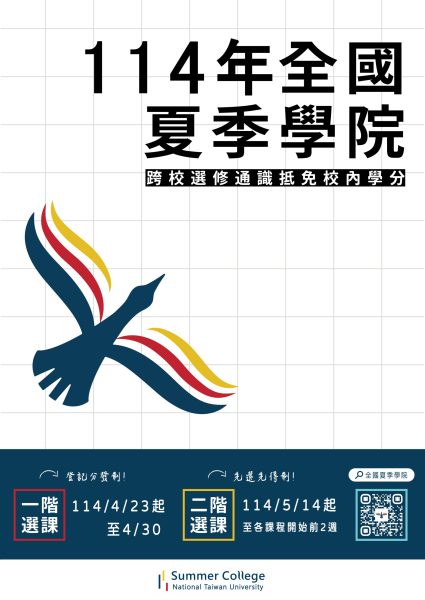
II. Summer College

Registration is conducted entirely online. During the course selection period, please use your proof of enrollment to register for an account, then proceed with online course selection and payment.

Note: Each student may select up to three courses.

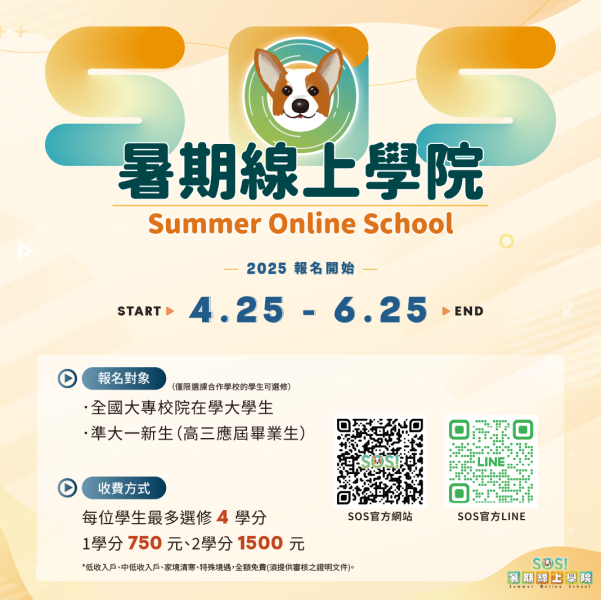
III. SOS! Summer School (Online)

The online registration and course selection system will be open from April 25 (Thu), 09:00 to June 30 (Sun), 23:59. Please create a personal account before selecting courses.

Note: Each student may register for a maximum of 4 credits.

For detailed information on summer general education courses, please click on “Summer Courses”, or contact Ms. Chang, Self-directed Learning Program, Center for General Education.

[Center for General Education News]

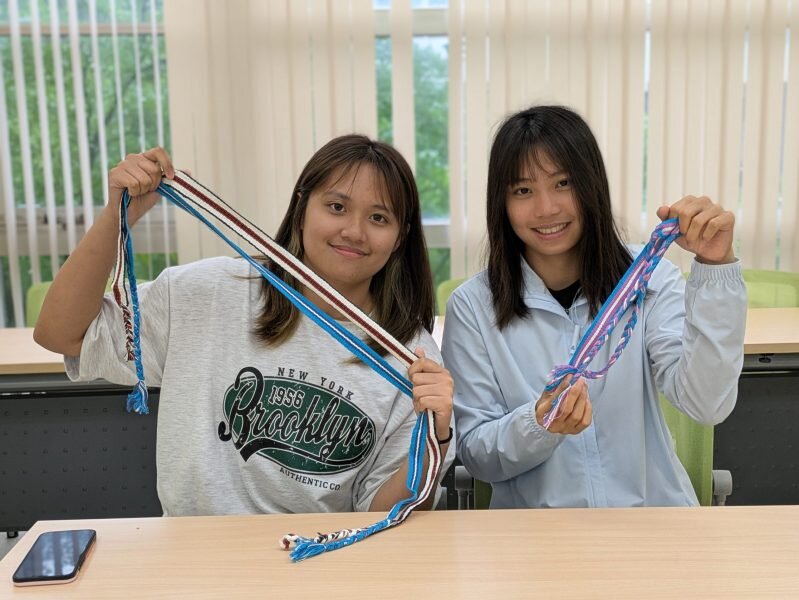
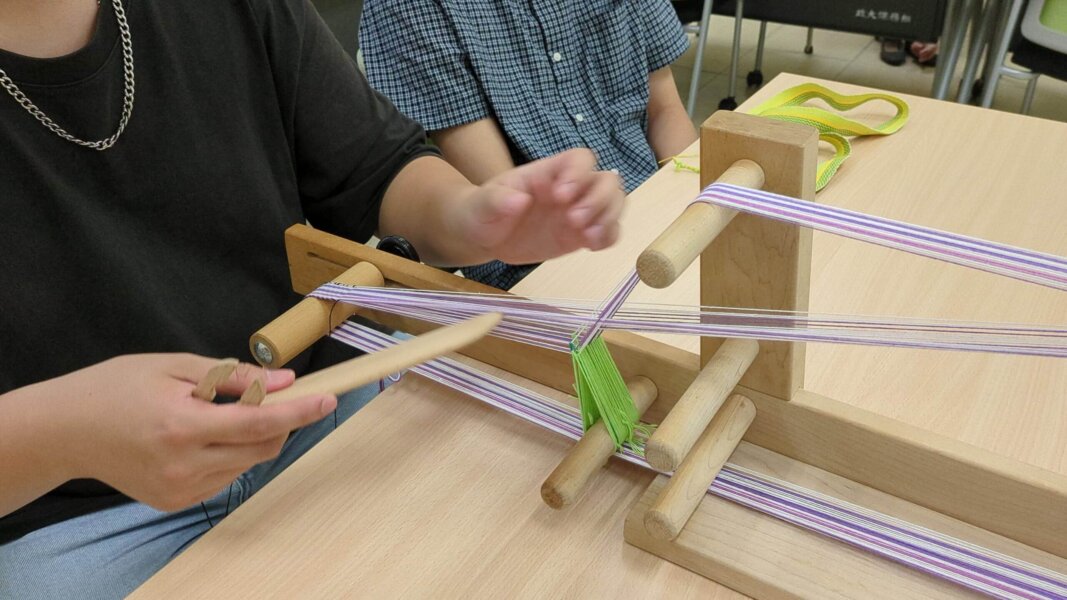
Walking into Commerce Building Room 304, one finds a bright and relaxed space. Students sit together, chatting while operating band-weaving machines, discussing pattern designs, and admiring each other’s work.

This special course was initiated by first-year students through the Self-Directed Learning Program and guided by Prof. Wang Ya-Ping from the Department of Ethnology.

Bringing together students from different colleges, the course involved hands-on weaving practice, appreciation of textile aesthetics, participation in workshops in Wulai, and deeper learning about Atayal weaving techniques and cultural narratives.


Atayal Weaving Culture

For the Atayal people, tninun (life) originates from the ancestral spirits’ tminun (weaving). This course went beyond skills acquisition, encouraging students to explore the cultural meanings and historical contexts embedded in weaving.

Students from diverse backgrounds joined the class, expanding their understanding and appreciation of cultural diversity through weaving. Over the semester, many began as complete beginners and ultimately completed two woven works. For them, weaving became more than beautiful patterns—it turned into a journey of self-reflection and discovery.

       Photo: Students with their finished works. (Center for the General Education )

From Weaving to Self-Understanding

“Weaving is a process of facing myself,” one student shared. “Sometimes I felt frustrated and wanted to start over, but those moments tested my ability to adjust and persist.”

Another student described weaving emotions into fabric: “Blue symbolizes courage, pink represents the love around me, and the white in the middle is myself.”

Each stitch became a record of feelings, each woven band a trace of months of growth—making every piece a unique expression of self.

The students’ reflections conveyed sincerity and joy. Thanks to their and the instructor’s active participation, the classroom atmosphere was warm and relaxed, a heartwarming scene in the busy weeks before finals—and a cherished memory woven into their university journey. The General Education Center encourages students to apply for self-directed learning, explore areas of interest, and invite friends to create a unique and meaningful college life together.


(Photo: Students became proficient in operating weaving machines after a semester of practice. Source: Center for General Education)

For details about the Self-Directed Learning Program application, please click “Self-Directed Learning” or contact Ms. Chang at the Center for General Education (ext. 63871).


[Campus News | Reported by Hsu, Chiao-Hsin]

Self-Directed Learning Final Presentation: Bridge Exhibition Game

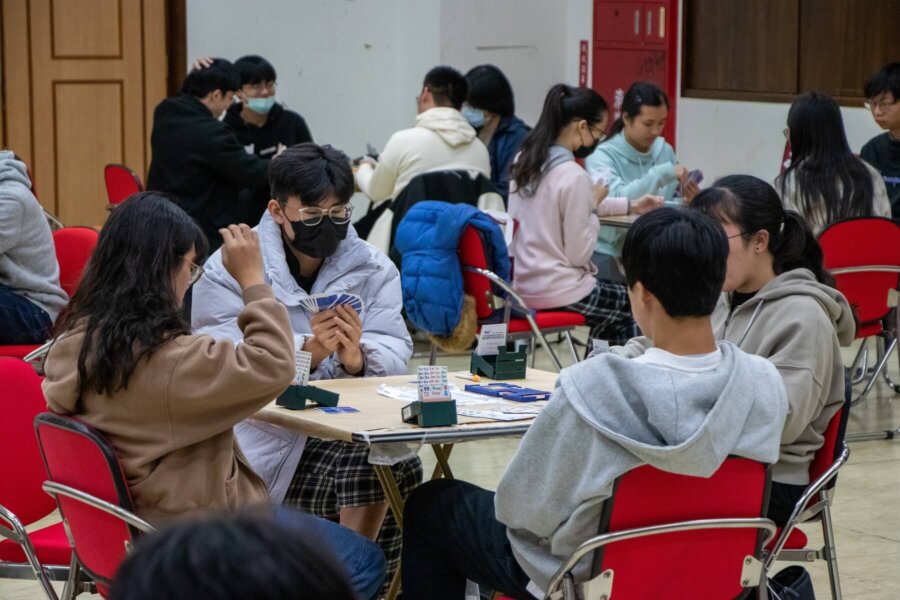
On the evening of January 4, the semester-end Bridge Exhibition Match took place in Yunxiu Hall. Four players gathered around each table, carefully considering their strategies and focusing on the unfolding plays. This event was held as the final competition for the self-directed learning project “Advanced Applications of Probability and Logic in Card Games” and invited members of the NCCU Bridge Club to join in. The goal was to allow students to apply classroom knowledge in practice while exchanging skills with peers.

The match adopted the contract bridge rules recognized by the World Bridge Federation (WBF) and was played in a team format. Each team had four players seated at two tables, with one pair sitting North–South and the other East–West. Bridge consists of two stages: bidding and play. During the bidding stage, players decide on the contract and trump suit based on their hands; during play, they take turns playing cards over 13 tricks to complete each round.

Students applied classroom knowledge to sharpen their bridge skills. (Source: Office of Academic Affairs)

Learning by Doing: The Spirit of Self-Directed Learning

To help students learn by doing, course instructor Prof. Chen Yuan-Tsung explained that classes were structured with concept reviews, followed by practice rounds, and then post-game discussions. “Many students had no prior experience with bridge, but after a semester of practice, they showed remarkable improvement,” he noted. Although the first two weeks were challenging due to the complexity of bridge, consistent guidance, peer support, and practice helped students gradually improve both their understanding and skills.

Bridge is not only a mental sport but also a test of teamwork. Players must calculate probabilities and solutions while working seamlessly with their partners. Lee Yi, a junior from the Department of Advertising, shared that she and her teammates often discussed strategies after matches to resolve uncertainties. Over time, she became more familiar with her partners’ thinking, allowing smoother cooperation during gameplay.

Next semester, the General Education Center will offer six self-directed learning projects: University Innovators, Free Software Inkscape: Creation and Applications, Podcasting and Audio Media Creation, Applications of Probability and Logic in Card Games (Bridge), Building with Bamboo: Indigenous Architecture and Culture, and Theory and Practice of Humanities of Tea.

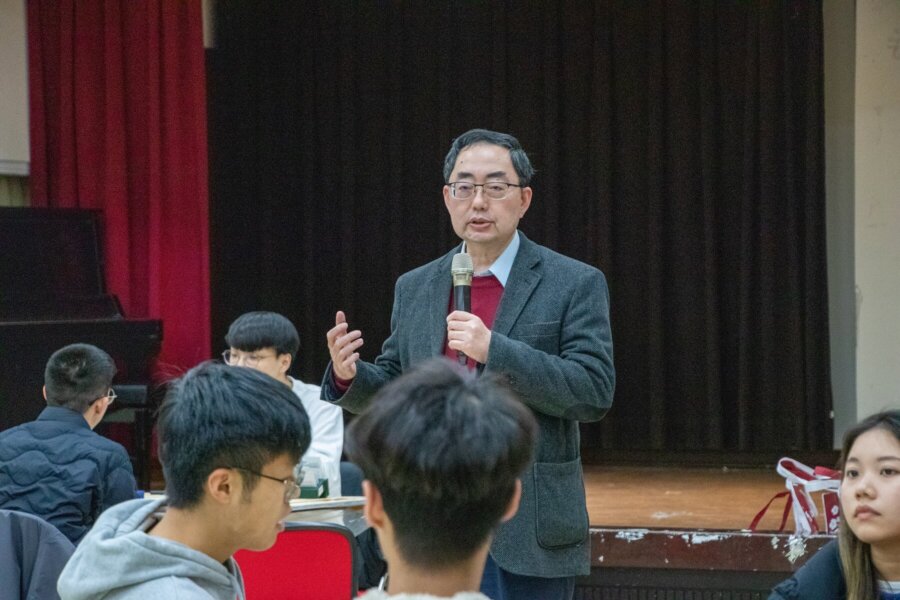
Vice President for Academic Affairs Lin Chi-Ping encouraged students at the event. (Source: Office of Academic Affairs)

Innovative Learning Models: Emphasizing Autonomy

Dean of Academic Affairs Lin Chi-Ping also attended the event to encourage students. He remarked that learning models can vary based on interdisciplinary combinations, and NCCU has been actively promoting self-directed learning courses in recent years. He explained that this bridge course exemplifies the approach by integrating knowledge across different fields while providing practical training. “Beyond strengthening card-playing skills, the course cultivates new ways of thinking,” he said, expressing hope that students will continue to embrace the spirit of autonomy and creativity fostered through self-directed learning.

              Course instructor Prof. Chen Yuan-Tsung. (Source: Office of Academic Affairs)

Source: NCCU Official Website

[Center for General Education News]

On the morning of June 9, 2023, a delegation of 13 faculty members and administrative staff from the General Education Center of National Taiwan University of Science and Technology (Taiwan Tech) visited the General Education Center of National Chengchi University (NCCU) for an exchange on the theme of “Professionalization of General Education.” The two institutions engaged in an in-depth dialogue and experience sharing.

The event was organized by the NCCU General Education Center. In the morning, participants took part in an experiential learning session at the Art and Culture Center’s Creative Lab, where a culinary workshop symbolized both family cohesion and the interdisciplinary collaboration at the heart of general education. In the afternoon, Director Mai Ai-Hsuan of the NCCU General Education Center led a discussion session, during which both sides exchanged views on the Ministry of Education’s “Improving General Education in Universities (IGER)” initiative and shared their experiences and plans for curriculum design, program development, and future implementation strategies.


(Director Ma-Ai Hsuan of the NCCU Center for General Education chaired the exchange meeting. Photo credit: Center for General Education)

Later, during a special seminar chaired by NCCU President Lee Tsai-Yen, participants actively discussed the challenges and opportunities of professionalizing general education. The vibrant exchange of ideas demonstrated the two universities’ shared vision of enhancing the quality and depth of general education. This visit not only established a strong foundation for future collaboration but also opened new possibilities for continued partnership and mutual growth.

                      (Group Photo. Photo credit: Center for General Education)


Students enrolled in the course Self-Directed Learning Project:  The Probability and Logic in Bridge Sports have spent a semester learning and practicing their skills. Now, they are ready to put their abilities to the test and challenge fellow bridge enthusiasts across campus!
We warmly welcome bridge lovers to join us in this exciting tournament—either to compete or to observe and exchange ideas.

The competition will follow the rules of Contract Bridge as recognized by the World Bridge Federation (WBF). Participants are encouraged to carefully review the competition rules and related instructional videos before registering.

Event Information

  • Registration Period: From now until June 6, 2024 (Thu), 23:59
  • Competition Date: June 20, 2024 (Thu), 18:00 – 20:30
  • Venue: Yunxiu Hall, 2F, Fengyu Building
  • Organizer: General Education Center, Office of Academic Affairs

Contact

Ms. Chang
Tel: +886-2-2939-3091 ext. 63871
Email: chy@nccu.edu.tw

Eligibility & Registration

Participation is team-based (4 players per team).

One team representative should complete the registration and provide a contact number.

Registration Form: https://reurl.cc/z15bYe

Have you often heard about the Self-Directed Learning General Education Courses but still aren’t quite sure what they are?

Before finals even begin, your roommate is already buried in final project reports; on weekends, classmates are busy with fieldwork or extracurricular activities for their self-directed learning courses… and you’re left in the dorm feeling lost?

Come and hear from students who have taken self-directed learning general education courses! Learn how they design their own syllabi, work closely with instructors, and open new doors in their university journey.

Students interested in these courses are welcome to join the sharing session and exchange ideas with peers. Staff members from the General Education Center will also be available to answer questions about the application process for self-directed learning.

Event Information

  • Date: Tuesday, June 10, 2025

  • Time: 12:10 – 13:30

  • Venue: Conference Room 5, 7th Floor, Administration Building

  • Registration Link: Click Here

  • Organizer: General Education Center, Office of Academic Affairs

  • Contact: Ms. Chang | Tel: 02-2939-3091 ext. 63871 | Email: chy@g.nccu.edu.tw

This semester’s end-of-semester sharing session will invite classroom observers to exchange their insights and reflections from the courses they observed. Participants will share interesting or exemplary teaching assistant (TA) practices, discuss how TA-led sessions can better support student learning, and provide suggestions for improving the classroom observation system.

By gathering the perspectives and experiences of observers—who directly engage with the classroom setting—the General Education Center will gain a clearer understanding of actual teaching practices. These insights will serve as a foundation for adjusting and designing General Education courses that better meet students’ needs.


Event Information

  • Date: June 5, 2025 (Thu)

  • Time: 12:00 – 14:00

  • Venue: Center for Teaching and Learning, 8F, Administration Building

  • Organizer: Center for Teaching and Learning, Office of Academic Affairs

[Office of Academic Affairs] Reported by Yang, Kai-Chieh

Final Presentation of “Humanities of Tea”: Local Practice of Tea Studies

The Humanities of Tea self-directed learning course, offered by the General Education Center at National Chengchi University, concluded this semester with impressive achievements. Breaking away from traditional teaching frameworks, the course encourages students to independently explore and practice. It integrates foundational knowledge of tea, humanistic concerns, and local industry resources—providing students with a unique learning experience while bringing new perspectives to the development of the local tea industry.

Balancing Theory and Practice: Exploring the Deeper Humanistic Connections of Tea

The course consists of two main parts: Introduction to Humanities of Tea and Fundamentals of Tea Studies. It covers both the knowledge and practical skills of sensory evaluation of tea, as well as the theory and practice of tea-making techniques. Using tea as a medium, the course guides students toward deeper humanistic reflection and self-exploration, while linking with disciplines such as psychology and Japanese tea ceremony aesthetics.

Students, grouped according to their interests, designed and implemented local cultural projects related to tea under the guidance of instructors and TAs. Through problem-based learning (PBL), they investigated how tea culture manifests in daily life, with projects such as the “Tea Journey” fully embodying the spirit of self-directed learning.

Active Exploration and Creativity: Viewing Tea Culture from Diverse Perspectives

Students’ initiative and creativity were fully stimulated through exploration. One student, Chao, shared why he chose this course: “I realized that tea can actually be understood from many different perspectives.” He described the course as a form of training that teaches students how to converge on valuable directions from a wide range of open-ended topics.

In the final presentation, one group compared Muzha Tieguanyin and Anxi Tieguanyin, asking: “Both are Tieguanyin teas, so why are there such clear differences in brewing methods and tea-making techniques?” They further explored the importance of tea-making methods and their impact. Another group visited the tea industry in Shenkeng with the question: “As urbanization and population outflow cause tea farming to decline, can tourism revitalize it?” They conducted fieldwork in the old street, visiting shops and interviewing local business owners to better understand the industry’s real challenges. These inquiry-driven approaches mark an important step toward self-directed problem solving.

Analyzing Tea Culture and Local Connections: Cross-Disciplinary Integration with Sustainability

Within the self-directed learning model, students demonstrated unique observations and in-depth analyses. The Beitou group re-examined Beitou’s tea heritage by linking tea history with the region’s hot spring culture. They analyzed how Japanese-style buildings, such as the Beitou Museum, embody the spirit of the tea ceremony, explored connections between Japanese tea aesthetics and the 24 solar terms, and even designed a one-day Beitou tour combining tea culture, hot springs, and a “five-senses healing” experience—showcasing cross-disciplinary application and problem-solving.

Meanwhile, the Pinglin group closely examined the region’s unique geographical environment, including how the Beishi River water conservation area affects water quality, and how soil and climate conditions benefit tea growth and flavor. They connected these observations to sustainable farming and soil-water conservation practices, noting ecological approaches such as maintaining ground cover and relying on natural predators. These diverse perspectives led to original insights on sustainability and tea production.

Deepening Learning and Inspiring Cross-Disciplinary Innovation

The Humanities of Tea course was co-designed by faculty and students, emphasizing learner autonomy. Through project-based research such as the “Tea Journey,” students presented their goals, methods, processes, outcomes, and reflections, showcasing their entire learning journey.

Their research topics ranged from Muzha Tieguanyin, to Beitou tea culture and hot springs, to revitalization of the Shenkeng tea industry. Starting with fundamental questions, students faced challenges, identified real obstacles, and engaged in fieldwork and interviews. By adopting cross-disciplinary and innovative approaches, they integrated knowledge and practice, unlocking their learning potential. The course not only deepened students’ understanding of Taiwan’s tea industry and cultural heritage but also significantly enhanced their self-directed learning and comprehensive competencies.

Source: NCCU Official Website

The Shanshui Forum embodies National Chengchi University’s vision and ongoing efforts toward teaching innovation, serving as a platform to showcase creative teaching achievements across disciplines.

This year’s forum features a series of keynote speeches, panel discussions, and teaching workshops, inviting experts and educators from within and beyond NCCU to share their innovative teaching practices and insights. The event aims to foster collaboration and dialogue among faculty members, building a vibrant community of teaching excellence.

Emphasizing cross-disciplinary dialogue and collaborative co-creation, the forum encourages educators to explore diverse teaching strategies and deepen classroom engagement. Through experience sharing and interactive discussions, participants are invited to reflect, grow, and inspire one another—advancing NCCU’s core value of teaching excellence and collectively opening a new chapter in innovative education.


Event Information

Date: Friday, May 16, 2025, 08:30–17:00

Venue: Conference Room I, 7th Floor, Administration Building

Organizer: Center for Teaching and Learning Development, Office of Academic Affairs, NCCU

Contact Person: Chia-Hui Wang (Ext. 62862) / 02-2939-3091

Registration: Click here to register

In the selection of Outstanding and Excellent Teaching Assistants for the 2nd semester of the 2023–24 Academic Year, the General Education Center is pleased to announce that 3 students were recognized as Outstanding Teaching Assistants and 11 students as Excellent Teaching Assistants.

The award ceremony was held on October 14, 2024 (Mon.), during the 1st Academic Affairs Meeting of the 2024–25 Academic Year. Congratulations to all the award recipients!

Honor Roll of Awardees: View here

Applications for new General Education courses or course revisions for Semester 114-1 will be accepted starting March 4, 2025. Please submit the course application form along with the minutes of your unit’s curriculum committee meeting to the General Education Center by Tuesday, April 1, 2025.

Course revisions include, but are not limited to: change of instructor, course syllabus, credit hours, course title in Chinese or English, offering unit or excluded departments, addition of new class sections, or courses that have not been offered for more than three years (excluding Core General Education courses). Such revisions should be submitted in the same manner as new course applications, with a clear explanation of the changes and differences.

For more information, please contact Ms. Yang at the Center for General Education (Ext. 62858).

【Office of Academic Affairs News】

“At first, I only joined the club to accompany a friend,” said Bo-Ya Tsai with a modest smile, as she began recounting her remarkable story. What started as a casual decision led her into the world of contract bridge, where talent, persistence, and countless hours of practice transformed her from a campus club member into a gold medalist at the 2023 Hangzhou Asian Games—and Taiwan’s most decorated female bridge player. Behind these honors lay hours of self-reflection, thousands of reviewed deals, and battles fought not only at the bridge table but also within herself.

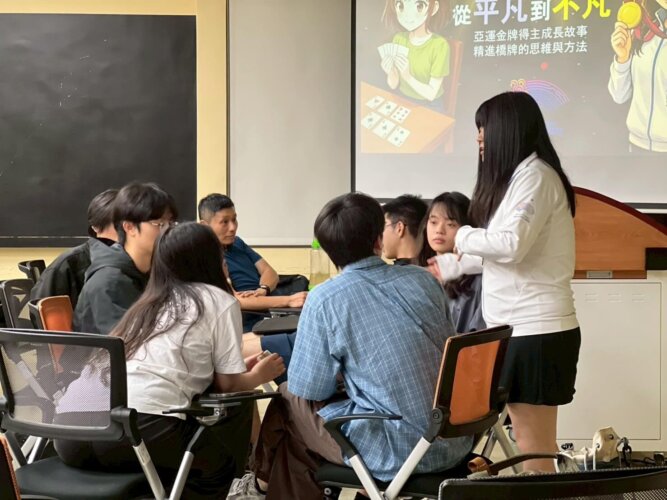
The General Education Center encourages self-directed learning courses to invite individuals with rich self-learning experiences to share their journeys. This semester, the course “Special Topics in Self-Directed Learning: Probability and Logic in Bridge” invited Bo-Ya Tsai, gold medalist of the 2023 Hangzhou Asian Games Mixed Team Bridge Event, to deliver a lecture titled “From Ordinary to Extraordinary.” She shared how, through self-discipline and autonomous learning, she honed her thinking and strategy as a bridge player.

“Success doesn’t come from believing after seeing results,” she said. “It comes from seeing results because you believe.”

Starting from Ordinary: Talent Is Only the Beginning

Tsai admitted that while she showed early promise in bridge, her true growth came from persistence and effort. From studying techniques alone and finding online partners, to building a strong team, her journey was one of quiet perseverance.

“I paid my own way to attend tournaments. I’d get so nervous that my legs shook,” she recalled. “But just like in games, you start from the small bosses and build up experience.”

For Tsai, every match—win or lose—was an opportunity to grow. She learned from mistakes, often reviewing the same situation multiple times until it became second nature.

“Even if you win with a lucky mistake, you still have to review it,” she explained. “You can’t rely on luck—only by facing your own errors can you improve.”


Growth Is Not Linear—It’s a Wave

“Progress comes quickly at first, but the more you grow, the more setbacks you face,” Tsai reflected. In 2016, she competed at the Asia-Pacific Cup in Beijing, but after a disappointing performance, her family urged her to quit. For a while, her confidence wavered—but she persisted.

Through challenges including the pandemic, personal struggles, and competitive lows, Tsai never stopped improving. Each failure became fuel for growth until bridge strategy became her second instinct. She also used reverse visualization as motivation—imagining herself standing on the podium, asking:

“What kind of person wins a gold medal in bridge? What do I still lack?”


From Ordinary to Extraordinary: Playing Her Winning Hand

“I never thought bridge would become an Asian Games event,” Tsai said. “We just wanted to perform well internationally.”

In 2018, bridge was officially included in the Asian Games, and the opportunity she had long prepared for finally arrived. Her team went on to win silver in 2018 and gold in 2023 in the Mixed Team event. Their achievements not only elevated Taiwan’s bridge reputation but also drew increased recognition and support from the Sports Administration.

After the talk, many students eagerly asked questions about learning strategies and motivation. Tsai patiently answered each one, showing the same dedication that defines her play. Through her story, she proved that no dream is too small—only those who prepare can seize their moment.

Her lecture inspired students to view perseverance and self-discipline as the foundations of success. The spirit of self-directed learning took root in their minds, reminding them that, like building one card upon another, persistence turns effort into excellence—and ordinary steps into extraordinary achievements.


Source: National Chengchi University News

Photos courtesy of the General Education Center, NCCU