[Center for General Education News]
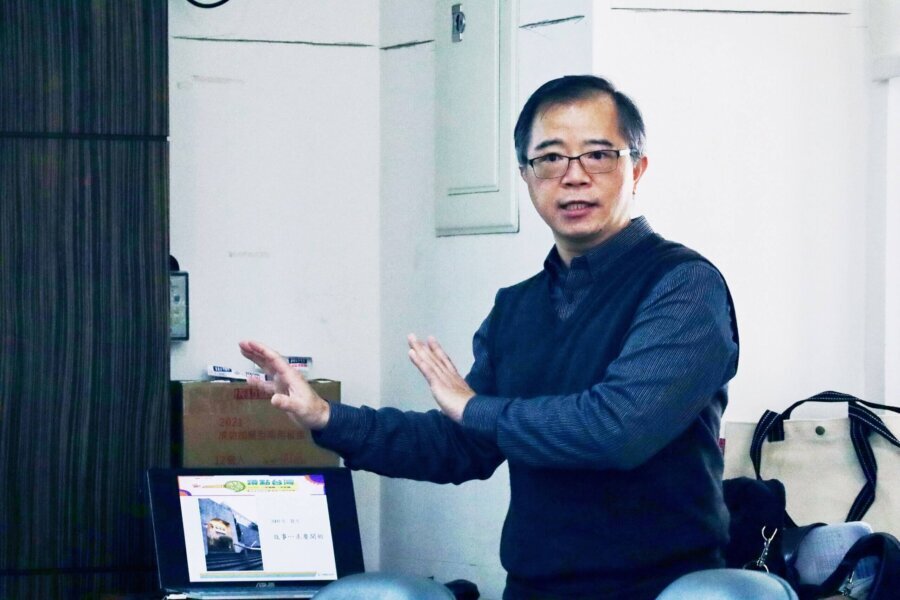
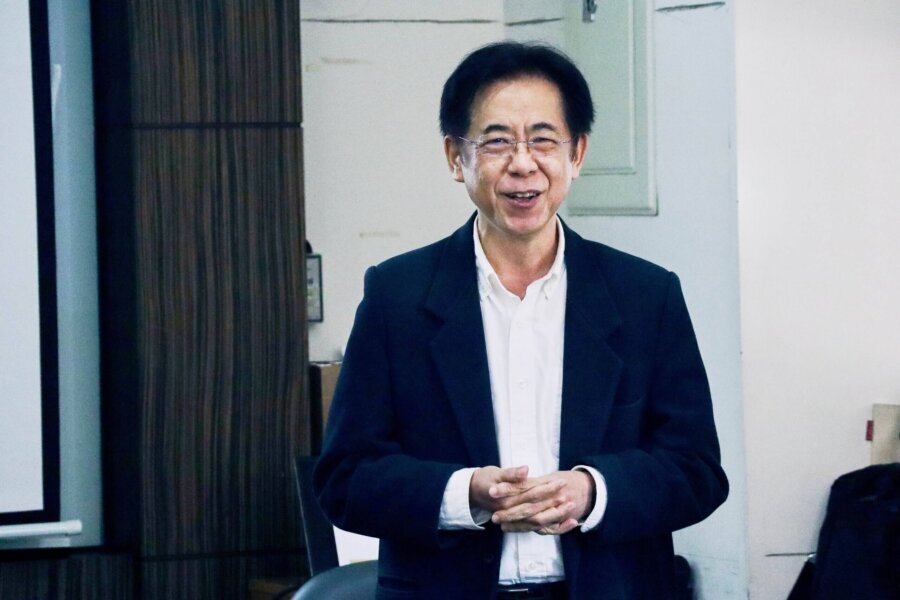
The inaugural session of the newly established General Education course for the Spring 2026 semester, the “Changing the World General Education Lecture Series,” was held on March 2 at the Cheng-En Lecture Hall, College of Law. Titled “Is Innovation a Science?”, the lecture featured Professor Se-Hwa Wu, Chair Professor of the Graduate Institute of Technology Management and Intellectual Property at the College of Commerce.
Professor Wu has an illustrious career in academia and public service, having served as the Dean of the College of Commerce, Director of the Center for Innovation and Creativity, President of National Chengchi University (NCCU), and Minister of Education. Given his long-standing tenure and deep emotional ties to NCCU, Professor Wu delivered a profound two-hour presentation. He elucidated why innovation is considered a rigorous “science,” exploring its conceptual roots, historical development, inherent possibilities, and its transformative impact on global civilization.

The Evolution of Innovation: From Industrial Economy to Humanistic Sustainability
Professor Wu began by defining the core meaning and objectives of innovation, distinguishing it from creativity, inventiveness, and entrepreneurship. He then analyzed the practical evolution of innovation through various case studies:
-
Innovation 1.0 (Industrial Economy): Focused on capital concentration and entrepreneurial drive. Key examples included Ford (process innovation), General Motors (brand innovation), and Starbucks (innovation of meaning).
-
Innovation 2.0 (Knowledge Economy): Guided by Moore’s Law, Gilder’s Law, and Metcalfe’s Law. Companies leveraged emerging technologies for breakthroughs, exemplified by TSMC and the Pokémon phenomenon.
-
Innovation 3.0 (Humanistic Sustainable Economy): Driven by new technologies, values, and generational shifts, innovation has become a daily necessity. Notable examples included ColaLife’s infant incubator liners and IMPCT, an educational investment platform founded by NCCU students.

A Guide for Action: The “Ten Lectures on Innovation”
Addressing why innovation often fails, Professor Wu introduced his “Ten Lectures on Innovation” as a framework for success. He concluded that innovation is the intersection of rational insight and sustainable practice. The overlapping social, economic, and personal goals of innovation continue to reshape the trajectory of modern civilization.
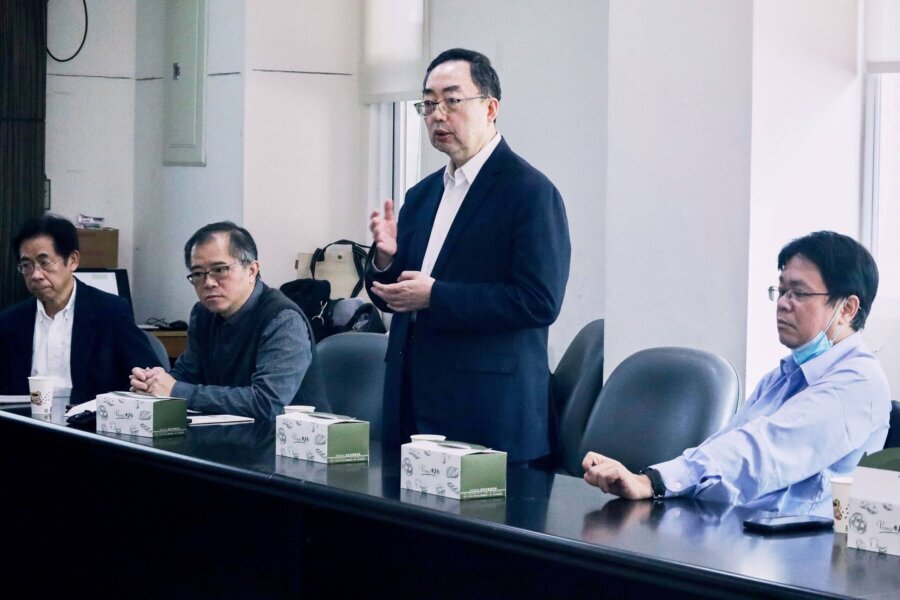
The Q&A session was moderated by Vice President for Academic Affairs Chi-Ping Lin. Students seized the opportunity to ask about innovation within the public sector. Professor Wu responded by sharing successful case studies from his tenure as Minister of Education. The lecture seamlessly integrated theory and practice, providing faculty and students with invaluable insights.
Upcoming Lectures
The “Changing the World” series is open to all faculty and students. External guests are also welcome to attend by registering through the online system. The second lecture, featuring Academician Kuan-Yen Hsiao of Academia Sinica, will take place on March 16. His topic, “Rousseau’s Social Contract and the Shaping of Modern Republican Democracy,” is highly anticipated.
Lecture Series Schedule
-
March 2: Prof. Se-Hwa Wu | Is Innovation a Science?
-
March 16: Prof. Kuan-Yen Hsiao | Rousseau’s Social Contract and the Shaping of Modern Republican Democracy
-
March 30: Prof. Cyrus Chu | The Hegemonic Rivalry Between the US and China
-
April 13: Prof. Chi-Jeng Yeh | Topic TBD
-
April 27: Prof. Yung-Chin Su | Legal Management in the AI Era: A Civil Law Perspective
-
May 11: Prof. Chintay Shih | Topic TBD
-
May 25: Prof. Yu-Yu Cheng | Topic TBD