This general education lecture invites Associate Professor Hsieh, Ming-Feng from the College of Architecture, Feng Chia University, recipient of the 11th National Outstanding General Education Teacher Award, to share how he integrates general education courses with community-building initiatives and cultural experiences. Through interdisciplinary practice and reflection, he has developed a teaching approach that bridges theory and action.

With his distinctive interdisciplinary background and innovative spirit, Professor Hsieh extends classroom learning into real-world contexts. Through case studies and fieldwork, he guides students to cross disciplinary boundaries, explore diverse interests, and develop independent thinking and problem-solving skills.

Through general education, the possibilities of knowledge integration and cross-domain collaboration are opened, enabling students to become active participants and thinkers. We sincerely invite you to join Professor Hsieh, Ming-Feng in exploring “Interdisciplinary General Education” and discover a different perspective on general education.

📍 Time: November 10, 2025 (Mon) 12:00–14:00

📍 Venue: Administration Building, 7th Floor, Conference Room 5 (Lunch provided)

🔗 About Professor Hsieh: https://reurl.cc/VWrpXn

📝 Register Now: https://reurl.cc/A3Qn4j

☎️ Contact: Ms. Wu, General Education Center, Ext. 63872

✉️ Email: yun63872@nccu.edu.tw

The newly offered general education courses for the first semester of the 2025–2026 academic year are as follows:


Domain Course Title Instructor Offering Unit
Natural Sciences Sleep and Health Chen, Chieh-Wen WenInstitute of Neuroscience / College of Science

Humanities

 Introduction to Taiwanese Tsai, Hui-Ming Graduate Institute of Taiwanese Literature / College of Liberal Arts
Social Sciences AI, Gender, and Labor  Chen, Fu-Hsuan Graduate Institute of Labor Research / College of Social Sciences

Interdisciplinary (Humanities, Social Sciences)

Innovative Media and Creativity Lin, Tsui-Chuan Department of Radio and Television / College of Communication
Informatics and Computing Special Topics in Applied Programming Chiu, Shu-Yi College of Informatics
College Program

Independent Study Project: 3D Modeling and Prototyping – From Concept to Creation

Fan, Ka-Se  Center of General Education / Office of Academic Affairs


For detailed course information, please click on the Course Title to visit the Course Search System.

Students enrolled in the course Self-Directed Learning Project:  The Probability and Logic in Bridge Sports have spent a semester learning and practicing their skills. Now, they are ready to put their abilities to the test and challenge fellow bridge enthusiasts across campus!
We warmly welcome bridge lovers to join us in this exciting tournament—either to compete or to observe and exchange ideas.

The competition will follow the rules of Contract Bridge as recognized by the World Bridge Federation (WBF). Participants are encouraged to carefully review the competition rules and related instructional videos before registering.

Event Information

  • Registration Period: From now until June 6, 2024 (Thu), 23:59
  • Competition Date: June 20, 2024 (Thu), 18:00 – 20:30
  • Venue: Yunxiu Hall, 2F, Fengyu Building
  • Organizer: General Education Center, Office of Academic Affairs

Contact

Ms. Chang
Tel: +886-2-2939-3091 ext. 63871
Email: chy@nccu.edu.tw

Eligibility & Registration

Participation is team-based (4 players per team).

One team representative should complete the registration and provide a contact number.

Registration Form: https://reurl.cc/z15bYe

The Shanshui Forum embodies National Chengchi University’s vision and ongoing efforts toward teaching innovation, serving as a platform to showcase creative teaching achievements across disciplines.

This year’s forum features a series of keynote speeches, panel discussions, and teaching workshops, inviting experts and educators from within and beyond NCCU to share their innovative teaching practices and insights. The event aims to foster collaboration and dialogue among faculty members, building a vibrant community of teaching excellence.

Emphasizing cross-disciplinary dialogue and collaborative co-creation, the forum encourages educators to explore diverse teaching strategies and deepen classroom engagement. Through experience sharing and interactive discussions, participants are invited to reflect, grow, and inspire one another—advancing NCCU’s core value of teaching excellence and collectively opening a new chapter in innovative education.


Event Information

Date: Friday, May 16, 2025, 08:30–17:00

Venue: Conference Room I, 7th Floor, Administration Building

Organizer: Center for Teaching and Learning Development, Office of Academic Affairs, NCCU

Contact Person: Chia-Hui Wang (Ext. 62862) / 02-2939-3091

Registration: Click here to register

Have you often heard about the Self-Directed Learning General Education Courses but still aren’t quite sure what they are?

Before finals even begin, your roommate is already buried in final project reports; on weekends, classmates are busy with fieldwork or extracurricular activities for their self-directed learning courses… and you’re left in the dorm feeling lost?

Come and hear from students who have taken self-directed learning general education courses! Learn how they design their own syllabi, work closely with instructors, and open new doors in their university journey.

Students interested in these courses are welcome to join the sharing session and exchange ideas with peers. Staff members from the General Education Center will also be available to answer questions about the application process for self-directed learning.

Event Information

  • Date: Tuesday, June 10, 2025

  • Time: 12:10 – 13:30

  • Venue: Conference Room 5, 7th Floor, Administration Building

  • Registration Link: Click Here

  • Organizer: General Education Center, Office of Academic Affairs

  • Contact: Ms. Chang | Tel: 02-2939-3091 ext. 63871 | Email: chy@g.nccu.edu.tw

This semester’s end-of-semester sharing session will invite classroom observers to exchange their insights and reflections from the courses they observed. Participants will share interesting or exemplary teaching assistant (TA) practices, discuss how TA-led sessions can better support student learning, and provide suggestions for improving the classroom observation system.

By gathering the perspectives and experiences of observers—who directly engage with the classroom setting—the General Education Center will gain a clearer understanding of actual teaching practices. These insights will serve as a foundation for adjusting and designing General Education courses that better meet students’ needs.


Event Information

  • Date: June 5, 2025 (Thu)

  • Time: 12:00 – 14:00

  • Venue: Center for Teaching and Learning, 8F, Administration Building

  • Organizer: Center for Teaching and Learning, Office of Academic Affairs

[Office of Academic Affairs] Reported by Yang, Kai-Chieh

Final Presentation of “Humanities of Tea”: Local Practice of Tea Studies

The Humanities of Tea self-directed learning course, offered by the General Education Center at National Chengchi University, concluded this semester with impressive achievements. Breaking away from traditional teaching frameworks, the course encourages students to independently explore and practice. It integrates foundational knowledge of tea, humanistic concerns, and local industry resources—providing students with a unique learning experience while bringing new perspectives to the development of the local tea industry.

Balancing Theory and Practice: Exploring the Deeper Humanistic Connections of Tea

The course consists of two main parts: Introduction to Humanities of Tea and Fundamentals of Tea Studies. It covers both the knowledge and practical skills of sensory evaluation of tea, as well as the theory and practice of tea-making techniques. Using tea as a medium, the course guides students toward deeper humanistic reflection and self-exploration, while linking with disciplines such as psychology and Japanese tea ceremony aesthetics.

Students, grouped according to their interests, designed and implemented local cultural projects related to tea under the guidance of instructors and TAs. Through problem-based learning (PBL), they investigated how tea culture manifests in daily life, with projects such as the “Tea Journey” fully embodying the spirit of self-directed learning.

Active Exploration and Creativity: Viewing Tea Culture from Diverse Perspectives

Students’ initiative and creativity were fully stimulated through exploration. One student, Chao, shared why he chose this course: “I realized that tea can actually be understood from many different perspectives.” He described the course as a form of training that teaches students how to converge on valuable directions from a wide range of open-ended topics.

In the final presentation, one group compared Muzha Tieguanyin and Anxi Tieguanyin, asking: “Both are Tieguanyin teas, so why are there such clear differences in brewing methods and tea-making techniques?” They further explored the importance of tea-making methods and their impact. Another group visited the tea industry in Shenkeng with the question: “As urbanization and population outflow cause tea farming to decline, can tourism revitalize it?” They conducted fieldwork in the old street, visiting shops and interviewing local business owners to better understand the industry’s real challenges. These inquiry-driven approaches mark an important step toward self-directed problem solving.

Analyzing Tea Culture and Local Connections: Cross-Disciplinary Integration with Sustainability

Within the self-directed learning model, students demonstrated unique observations and in-depth analyses. The Beitou group re-examined Beitou’s tea heritage by linking tea history with the region’s hot spring culture. They analyzed how Japanese-style buildings, such as the Beitou Museum, embody the spirit of the tea ceremony, explored connections between Japanese tea aesthetics and the 24 solar terms, and even designed a one-day Beitou tour combining tea culture, hot springs, and a “five-senses healing” experience—showcasing cross-disciplinary application and problem-solving.

Meanwhile, the Pinglin group closely examined the region’s unique geographical environment, including how the Beishi River water conservation area affects water quality, and how soil and climate conditions benefit tea growth and flavor. They connected these observations to sustainable farming and soil-water conservation practices, noting ecological approaches such as maintaining ground cover and relying on natural predators. These diverse perspectives led to original insights on sustainability and tea production.

Deepening Learning and Inspiring Cross-Disciplinary Innovation

The Humanities of Tea course was co-designed by faculty and students, emphasizing learner autonomy. Through project-based research such as the “Tea Journey,” students presented their goals, methods, processes, outcomes, and reflections, showcasing their entire learning journey.

Their research topics ranged from Muzha Tieguanyin, to Beitou tea culture and hot springs, to revitalization of the Shenkeng tea industry. Starting with fundamental questions, students faced challenges, identified real obstacles, and engaged in fieldwork and interviews. By adopting cross-disciplinary and innovative approaches, they integrated knowledge and practice, unlocking their learning potential. The course not only deepened students’ understanding of Taiwan’s tea industry and cultural heritage but also significantly enhanced their self-directed learning and comprehensive competencies.

Source: NCCU Official Website

【Office of Academic Affairs News】

“At first, I only joined the club to accompany a friend,” said Bo-Ya Tsai with a modest smile, as she began recounting her remarkable story. What started as a casual decision led her into the world of contract bridge, where talent, persistence, and countless hours of practice transformed her from a campus club member into a gold medalist at the 2023 Hangzhou Asian Games—and Taiwan’s most decorated female bridge player. Behind these honors lay hours of self-reflection, thousands of reviewed deals, and battles fought not only at the bridge table but also within herself.

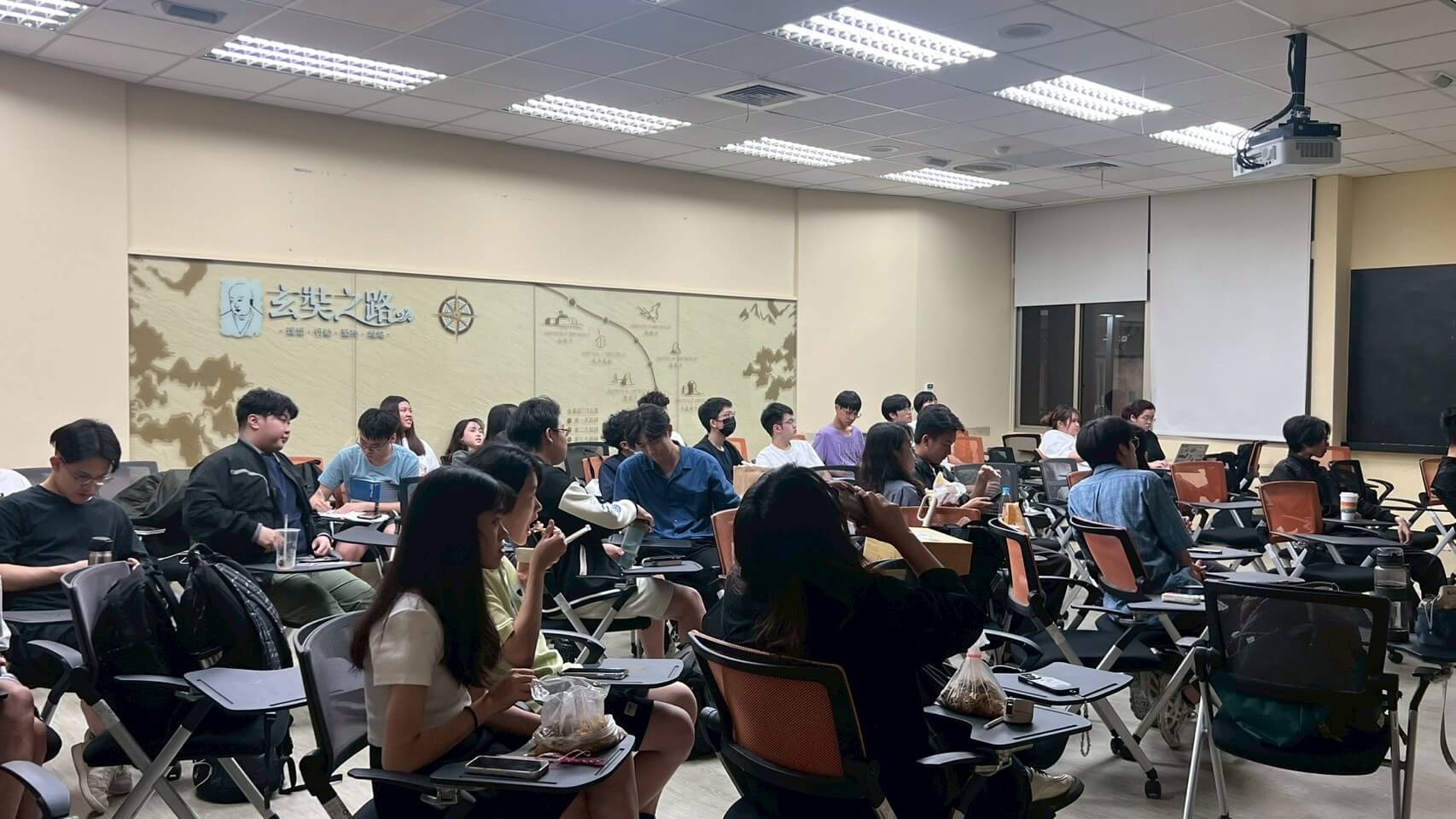
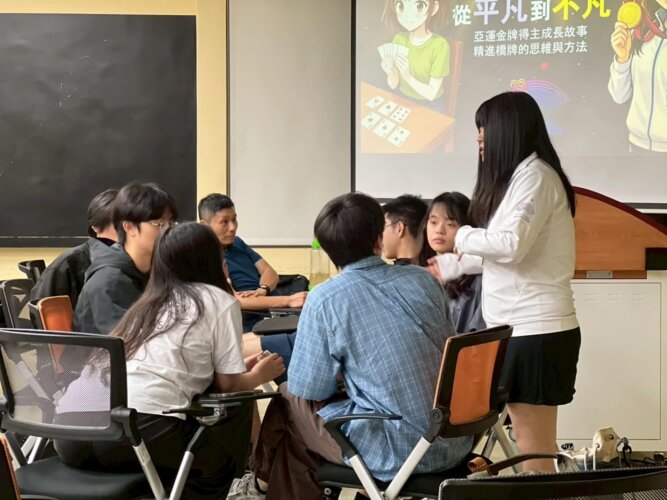
The General Education Center encourages self-directed learning courses to invite individuals with rich self-learning experiences to share their journeys. This semester, the course “Special Topics in Self-Directed Learning: Probability and Logic in Bridge” invited Bo-Ya Tsai, gold medalist of the 2023 Hangzhou Asian Games Mixed Team Bridge Event, to deliver a lecture titled “From Ordinary to Extraordinary.” She shared how, through self-discipline and autonomous learning, she honed her thinking and strategy as a bridge player.

“Success doesn’t come from believing after seeing results,” she said. “It comes from seeing results because you believe.”

Starting from Ordinary: Talent Is Only the Beginning

Tsai admitted that while she showed early promise in bridge, her true growth came from persistence and effort. From studying techniques alone and finding online partners, to building a strong team, her journey was one of quiet perseverance.

“I paid my own way to attend tournaments. I’d get so nervous that my legs shook,” she recalled. “But just like in games, you start from the small bosses and build up experience.”

For Tsai, every match—win or lose—was an opportunity to grow. She learned from mistakes, often reviewing the same situation multiple times until it became second nature.

“Even if you win with a lucky mistake, you still have to review it,” she explained. “You can’t rely on luck—only by facing your own errors can you improve.”


Growth Is Not Linear—It’s a Wave

“Progress comes quickly at first, but the more you grow, the more setbacks you face,” Tsai reflected. In 2016, she competed at the Asia-Pacific Cup in Beijing, but after a disappointing performance, her family urged her to quit. For a while, her confidence wavered—but she persisted.

Through challenges including the pandemic, personal struggles, and competitive lows, Tsai never stopped improving. Each failure became fuel for growth until bridge strategy became her second instinct. She also used reverse visualization as motivation—imagining herself standing on the podium, asking:

“What kind of person wins a gold medal in bridge? What do I still lack?”


From Ordinary to Extraordinary: Playing Her Winning Hand

“I never thought bridge would become an Asian Games event,” Tsai said. “We just wanted to perform well internationally.”

In 2018, bridge was officially included in the Asian Games, and the opportunity she had long prepared for finally arrived. Her team went on to win silver in 2018 and gold in 2023 in the Mixed Team event. Their achievements not only elevated Taiwan’s bridge reputation but also drew increased recognition and support from the Sports Administration.

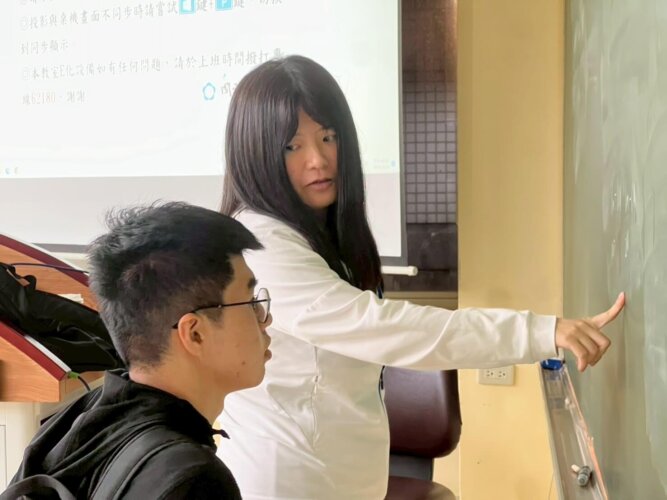
After the talk, many students eagerly asked questions about learning strategies and motivation. Tsai patiently answered each one, showing the same dedication that defines her play. Through her story, she proved that no dream is too small—only those who prepare can seize their moment.

Her lecture inspired students to view perseverance and self-discipline as the foundations of success. The spirit of self-directed learning took root in their minds, reminding them that, like building one card upon another, persistence turns effort into excellence—and ordinary steps into extraordinary achievements.


Source: National Chengchi University News

Photos courtesy of the General Education Center, NCCU